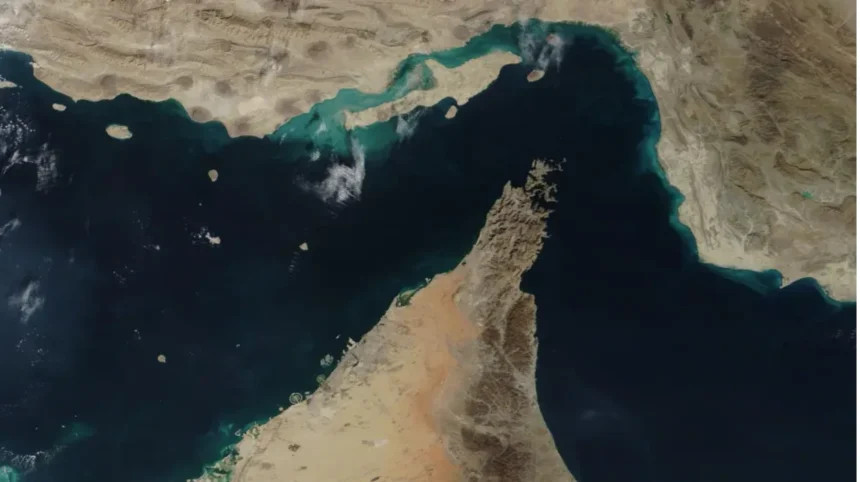
The UN Security Council currently has an important decision to make. Recently, the United States has submitted a resolution condemning its neighbour, Iran, who has been blockading the international seaway known as the Strait of Hormuz.
The resolution, which is supported by the US and Bahrain, UAE, Qatar, Saudi Arabia and Kuwait, is being debated in response to a sharp increase in tension in the region due to the US-targeted bombing campaign against Iran known as Operation Epic Fury, which killed Iranian Supreme Leader Ayatollah Khamenei.
As a result of Iran’s blockade, global energy supply has significantly decreased. The strait is a choke point for approximately 20-25% of the worldwide oil trade and also accounts for 20% of the worldwide liquefied natural gas exports. The US Ambassador to the United Nations, Mike Waltz has taken the lead in promoting the resolution as it is necessary, in his words, to deter Iran from continuing to undermine international peace and security.
Crisis Origins and Escalation
On February 28, 2026, a confrontation erupted between the United States and Israel when they both conducted precision airstrikes against Iranian nuclear and military sites. Iran quickly retaliated against this assault with their own countermeasures. The Islamic Revolutionary Guard Corps began issuing statements warning of attacks against shipping, deployed sea mines, attacked ships and implemented GNSS jamming operations, thereby effectively closing the Strait of Hormuz to nearly all shipping traffic, within just four days of the airstrikes, by March 2, 2026.
The Iranian government then declared the Strait of Hormuz would be closed to “hostile” shipping. Analysts contend that this violates the United Nations Convention on the Law of the Sea. The short-lived ceasefire that was tried after these actions was broken on April 8 and Iran began charging tolls greater than $1 million per vessel and only allowed vessels from “friendly” countries to pass through. By doing this, Iran further militarized the Persian Gulf and announced its creation of the Strait Authority on May 5, 2026.
As a result, the United States began to blockade all Iranian ports starting on April 13, resulting in thousands of mariners and vessels being stranded. As a result, President Donald Trump, who was re-elected to a second term, phased up his unprecedented act by initiating Operation Project Freedom in May 4, 2026, to provide naval escort of commercial shipping through the Strait of Hormuz; he subsequently suspended said operation shortly thereafter. The proposed draft resolution builds directly upon United Nations Security Council Resolution 2817 adopted on March 11, 2026.
Draft Resolution Details and Objectives
The proposed text, co-sponsored by the US and its Gulf partners, invokes Chapter VII of the UN Charter, characterizing Iran’s blockade as a clear threat to international peace. It demands that Iran immediately cease all attacks on shipping, remove sea mines, end toll impositions, and restore unrestricted navigation, including a humanitarian corridor for essential aid, fertilizers, and helium shipments. Unlike prior measures, this draft stops short of authorizing military force or immediate sanctions, focusing instead on diplomatic pressure to compel compliance. Bahrain’s Ambassador Jamal Fares Alrowaiei emphasized this measured approach during recent discussions, noting that the resolution aims to affirm the strait’s status as an international waterway vital to global trade.
US Ambassador Mike Waltz delivered a compelling address on April 28 at the UN, declaring,
“The Strait of Hormuz is not Iran’s moat, hostage, or bargaining chip.”
He highlighted Iran’s responsibility for sinking or capturing vessels and detailed the human cost, including over 40 ships hit, more than 10 crew members killed, and widespread fires and spills. Waltz’s remarks underscored the resolution’s urgency, pointing to the US sinking or capturing nine Iranian vessels in response. This diplomatic push comes amid ongoing negotiations, with no vote scheduled yet, raising questions about the council’s ability to act decisively given historical veto patterns from Russia and China.
Key Statements Shaping the Narrative
President Trump amplified the US stance on May 5 via social media, posting that
“the Middle East war will end if Iran agrees to latest terms,”
specifically calling for the strait to open “to all, including Iran.” These words reflect a blend of coercion and concession, positioning the resolution as a pathway to de-escalation while maintaining pressure. Gulf states have echoed this sentiment, with their unified backing signaling a rare alignment against Tehran. The collective stance contrasts sharply with Iran’s position, where officials justify the blockade as a legitimate defense of sovereignty over the Persian Gulf, selectively permitting allied traffic while barring Western vessels.
Waltz further elaborated in a March 22 “Face the Nation” interview transcript, stressing the need for council action to prevent economic catastrophe. His full remarks at a April 7 UN hearing on the crisis reiterated rejection of Iran’s control claims, framing the blockade as an extension of aggressive proxy warfare. These statements, integrated into the draft’s preamble, draw on Resolution 2817’s precedents, which had garnered UK support as noted in official X posts from the UK Mission to the UN. Together, they weave a narrative of collective security against unilateral disruption.
Economic and Strategic Impacts
The blockade’s toll on global markets has been profound, with seaborne oil traffic plummeting 70 percent initially and nearing zero by mid-April, stranding 20,000 mariners, 2,000 ships, and 230 oil tankers. Brent crude prices surged to $126 per barrel in March, marking the largest monthly rise on record, while disruptions extended to 30 percent of global urea fertilizer and helium supplies. Gulf producers faced severe cuts: Saudi Arabia reduced output by 20 percent to 8 million barrels per day, with Qatar and Kuwait declaring force majeure on gas and oil exports, collectively losing 10 million barrels per day.
UNCTAD reports highlight implications for global trade and development, warning of cascading effects on food security and energy prices worldwide. The 2026 Iran war fuel crisis, as documented in related analyses, has triggered supply disruptions felt from Europe to Asia. Strategically, the strait remains indispensable, handling one-fifth of global LNG and a quarter of oil, amplifying the resolution’s stakes. Iran’s tactics, including ship attacks and jamming, have not only choked energy flows but also tested the Security Council’s relevance in maritime disputes.
Parties’ Positions and Diplomatic Dynamics
The US and Gulf allies demand unequivocal reopening, viewing the blockade as economic warfare that undermines regional stability. Their draft seeks to enforce navigation rights without escalating to force, prioritizing humanitarian access amid stalled ceasefire efforts. Iran, conversely, asserts territorial primacy, establishing tolls and selective protocols that defy UNCLOS norms. This polarization mirrors broader geopolitical rifts, with Russia and China likely to scrutinize the Chapter VII invocation, recalling their past vetoes on Iran-related measures.
Gulf diplomats frame their counterstrike as defensive, leveraging Resolution 2817 to bolster the new draft. The US blockade of Iranian ports adds a layer of reciprocity, yet risks broadening the conflict. Trump’s conditional peace offer introduces flexibility, potentially swaying neutral council members toward endorsement.
UN Security Council’s Critical Challenges
From a critical lens on United Nations activities, this draft exposes persistent fractures within the Security Council. Resolution 2817’s adoption marked a rare consensus, yet its implementation faltered without enforcement teeth, allowing Iran’s defiance to persist. The current proposal, while advancing Chapter VII language, treads cautiously to avoid vetoes, diluting its potential impact. Critics argue this reflects the council’s structural bias toward great-power paralysis, where US-led initiatives on Iran routinely face opposition from Moscow and Beijing.
Moreover, the selective humanitarian corridor raises enforcement questions: who verifies compliance amid active hostilities? The absence of sanctions or force authorization signals diplomatic timidity, prioritizing consensus over efficacy. As negotiations unfold this week, the council’s handling will test its credibility in safeguarding vital sea lanes, a mandate repeatedly affirmed yet rarely upheld. Gulf states’ involvement amplifies pressure, but without bridging P5 divides, the resolution risks becoming symbolic verbiage in a crisis imperiling global economies.
Broader Implications for Global Order
The Hormuz standoff reverberates beyond the Gulf, intertwining energy security with UN diplomacy. Oil market volatility has spurred production hikes elsewhere, yet fertilizer shortages threaten agricultural yields globally. Operation Project Freedom’s pause hints at backchannel talks, but Iran’s intransigence persists. For the Security Council, success hinges on transcending veto dynamics to enforce maritime law, a litmus test for relevance in 2026.
Ultimately, this draft resolution represents a concerted bid to reclaim the strait, blending condemnation with calls for restraint. As US Ambassador Waltz and allies press forward, the UN’s response will define its role in averting wider war. With stakes encompassing trillions in trade and millions in livelihoods, the council cannot afford inaction.