In a quiet but significant move in Mogadishu, the National Independent Human Rights Commission (NIHRC) of Somalia and UNICEF Somalia have taken a step toward institutionalizing a more robust framework for child rights protection. The meeting, held on 27 April 2026, brought together Dr. Maryam Qasim, Chairperson of NIHRC, and Sandra Lattouf, UNICEF Representative in Somalia, to outline a shared vision of how national human?rights mechanisms and the UN agency can work in tandem to move beyond policy rhetoric and deliver tangible results for children in one of the world’s most fragile states.
This engagement is emblematic of a broader trend: the growing reliance by the United Nations system on national human?rights institutions (NHRIs) as partners in monitoring, accountability, and advocacy, particularly in conflict?affected and institutionally weak contexts.
The meeting in Mogadishu, while framed in gentle language, carries a critical undercurrent: it is yet another example of the UN’s attempt to outsource or at least co?delegate the task of enforcing child?rights standards to domestic bodies that often lack the political independence, resources, or enforcement muscle to fully carry that mantle.
From policy commitments to on?the?ground enforcement
At the start of the meeting came a clear message regarding the intent of all parties: to develop and protect children’s rights, as well as to enhance national child protection systems. Dr. Maryam Qasim stressed that we have to take action on the ground with protections for children; they must “move beyond policies and declarations.” Therefore, her statement serves not only to call for change but also serves as a tacit acknowledgment that the gap between the law and practice in child protection in Somalia is still significant, despite many years of international involvement.
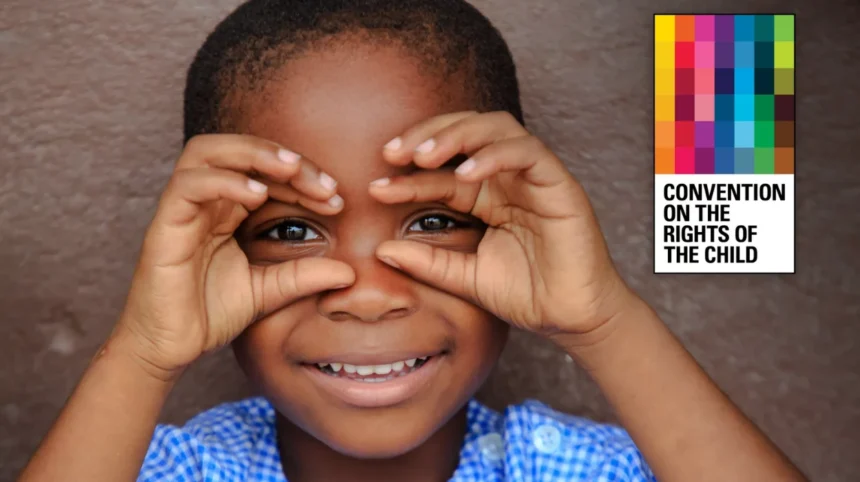
Somalia has been a testing ground for child rights initiatives led by the UN, ranging from a Convention on the Rights of the Child to frameworks driven by it, to child-protection Units supported by UNICEF, to monitoring mechanisms.
However, this has not always been a steady example of steady progress. Rather, it depends very much on the attention of donors, safety from violence, and the complaisance of the politicians. Her comment sufficiently conveys the inherent conflict in the UN’s method of complying with worldwide standards for child rights through declaring such, while in fact, the execution of such laws is the responsibility of the domestic government, with only the UN providing cheer and support from outside.
What child rights protection means in Somalia
Child rights protection is defined more broadly than mere protection; it encompasses survival and development (also sometimes referred to as “non-discrimination”), as well as the child’s participation as an active agent in their own life. As the principal agency of the UN dealing with children’s rights, UNICEF defines practical areas of child rights in relation to laws, policies, and practices as: birth registration; education; health; protection from violence, economic exploitation, and from abuse; as well as having the opportunity to express their views about issues affecting them.
In this context, the role of the National Human Rights Commission (NIHRC) of Somalia is critical, but very limited in scope. As the national human-rights commission, the NIHRC has the legal authority to monitor compliance with human rights standards, review laws and policies, and advocate for reforms; this includes scrutiny of laws affecting child labour, child marriage, and issues of juvenile justice and children affected by armed conflict.
When Sandra Lattouf stated, “UNICEF will assist national authorities in strengthening child protection frameworks and accountability mechanisms,” she endorsed the UN’s position that UNICEF will provide technical assistance, normative guidance, and some resources, but it cannot assume responsibility for enforcement of rights by the state.
The institutional architecture of child rights protection
The discussion in Mogadishu must be analyzed through the lens of the overall framework of child rights protection. The Convention on the Rights of the Child (CRC), which has been ratified by nearly every state that is a member of the United Nations, provides the normative basis for both national level and international child rights activities. According to the CRC and its Optional Protocols, states have specific obligations to protect children from violence, exploitation, abuse and neglect and to ensure children have access to education, health and justice.
As a key local level oversight entity, National Human Rights Institutions such as NIHRC, fulfill an essential role under the CRC and its Optional Protocols, including monitoring implementation of CRC consistent principles within the context of legislation, budgeting and provision of services and holding authorities accountable for non-compliance with their obligations.
Yet this model is not without criticism. Scholars and civil?society actors have pointed out that many NHRIs remain underfunded, politically vulnerable, or institutionally weak, and that UN support often focuses on technical capacity (drafting manuals, training staff, funding reports) rather than on protecting these institutions from political interference.
The UN’s role: facilitator, shield, or bystander?
The UN’s approach to child rights protection in Somalia exemplifies a recurring pattern in UN operations: the deployment of soft power over hard enforcement. UNICEF does not arrest violators, close down exploitative factories, or disarm militias that recruit children; instead, it lobbies, monitors, partners with governments and commissions, and channels funds into programmes. When Dr. Maryam Qasim speaks of the need to move beyond declarations, part of what she is signalling is the disconnect between UN?endorsed norms and domestic enforcement realities.
From a critical perspective, the UN’s engagement with NIHRC can be lauded for seeking to localize child?rights protection, but it can also be scrutinized for evading the tougher questions of accountability. In Somalia, where children are still vulnerable to recruitment, displacement, and exploitation, the UN’s partnership with NIHRC risks being another layer of systemic oversight without direct enforcement.
This is not to say that the partnership is without value. On the contrary, NIHRC?UNICEF collaboration can help institutionalize child?rights monitoring, produce evidence?based reports, and push Somali authorities to match their international commitments with concrete legislative and budgetary changes.
What the meeting signals for UN reform and child?rights practice
The meeting held in Mogadishu represents a small-scale demonstration of a broader strategy by the United Nations to integrate itself into national structures rather than operate via parallel efforts. United Nations Children’s Fund (UNICEF) is seeking to enhance the National Independent Human Rights Commission’s (NIHRC) ability to monitor violations against child rights and promote both legal and policy reform by creating an internal, domestic agency that has the capacity to carry on with the UN’s child rights agenda once funding cycles have expired and staffing has changed.
If the UN is truly committed to protecting child rights, then it needs to shift from simply providing support to national institutions to also addressing the underlying structural causes of child rights violations, such as conflict economics, the failure to punish armed groups, and inequity in service delivery.
Additionally, the meeting underscores the importance of establishing human rights institutions that are attuned to child rights. UNICEF’s support for developing this area of specialization helps to establish child rights as a politically salient issue and not just a technical side note in a larger dialogue around human rights.
Towards a more critical and accountable UN child?rights agenda
Despite the modest tone of NIHRC and UNICEF’s discussion, it provides a clearer picture of a larger debate about the future of UN child rights activities specifically within fragile and conflict-affected nations. If the UN remains focused only on providing capacity-building and technical assistance, it may very well become a community supporter of child rights violations without the commitment to confront and make choices about the political factors that drive these violations.
The partnership’s test in Somalia will be very simple: will children experience and demonstrate improved safety, education, health and justice in the next few years? The comments made by Dr. Maryam Qasim about going beyond child rights protection through declarations and policies are not simply rhetoric; they serve as milestones along the path by which the UN and its partners will be evaluated.
If NIHRC sets out to become a better, independent, and more visible advocate for children, and if UNICEF provides stipulations of political compliance in order to provide assistance, the Mogadishu meeting could be viewed as an important step toward establishing more generally critical and accountable child rights structures within the UN.