The concept of UN flights lifelines has evolved from a supplementary logistics tool into a central pillar of humanitarian response across multiple conflict zones. In 2026, air operations coordinated by the United Nations Office for the Coordination of Humanitarian Affairs and related agencies have become indispensable in regions where conventional supply routes have effectively collapsed. Lebanon, Gaza, and Sudan represent three distinct theatres where access constraints ranging from active hostilities to bureaucratic blockades have forced aid agencies to rely heavily on aerial delivery systems.
The reliance on these air corridors reflects a broader transformation in humanitarian logistics observed since 2025, when escalating violence and infrastructure destruction sharply reduced ground convoy viability. Airlifts now function not only as emergency interventions but as semi-permanent supply chains, sustaining millions of civilians amid prolonged instability. The scale of these operations, however, raises complex questions about sustainability, cost, and long-term effectiveness in environments where conflict dynamics remain unresolved.
Lebanon’s fragile equilibrium under aerial humanitarian support
In Lebanon, humanitarian flights have played a stabilizing role in a healthcare system strained by renewed cross-border tensions. Since late 2025, escalating exchanges involving Hezbollah and Israel have displaced tens of thousands, pushing medical facilities in Beirut and southern regions toward capacity limits. Air deliveries have ensured the continuous supply of trauma kits, antibiotics, and essential surgical equipment.
These interventions have helped prevent systemic collapse in critical care services. Hospitals that would otherwise face acute shortages have managed to maintain operational continuity, albeit under persistent pressure. The strategic use of air corridors has therefore become a buffer against cascading health crises in densely populated urban centers.
Conflict dynamics restricting ground access
The operational environment in southern Lebanon illustrates the limits of traditional aid delivery. Shelling and infrastructure damage have rendered key transport routes unreliable or entirely unusable. Aid convoys face not only physical risks but also delays linked to shifting frontlines and security clearances.
Air operations circumvent many of these constraints, enabling rapid deployment into areas where ground access would require days of negotiation or remain impossible. This shift reflects a broader pattern seen throughout 2025, when humanitarian actors increasingly prioritized speed and predictability over cost efficiency in high-risk environments.
Gaza’s dependency on aerial aid amid prolonged blockade
In the Gaza Strip, the reliance on UN flights lifelines has intensified due to persistent restrictions on land crossings. Aid inflows through traditional entry points have remained significantly below humanitarian requirements, creating chronic shortages of food, medicine, and fuel.
Aerial deliveries have partially mitigated these deficits, enabling agencies such as United Nations Relief and Works Agency for Palestine Refugees in the Near East to sustain operations across densely populated areas. However, the scale of need affecting over two million residents far exceeds what air logistics alone can provide, highlighting the structural limitations of this approach.
Nutritional crisis and civilian vulnerability
The humanitarian situation in Gaza has deteriorated sharply since 2025, with rising malnutrition rates and increasing civilian casualties. Airlifts have prioritized high-value, low-volume cargo such as therapeutic food and medical supplies, aiming to maximize impact within logistical constraints.
Despite these efforts, the gap between supply and demand remains substantial. The dependency on air corridors underscores the severity of access restrictions while also exposing the inherent inefficiencies of relying on aviation to sustain large populations over extended periods.
Sudan’s expansive crisis and the limits of aerial reach
In Sudan, particularly in the Darfur region, the scale of displacement has stretched humanitarian logistics to their limits. Ongoing clashes between the Sudanese Armed Forces and the Rapid Support Forces have fragmented territorial control, making coordinated ground operations nearly impossible.
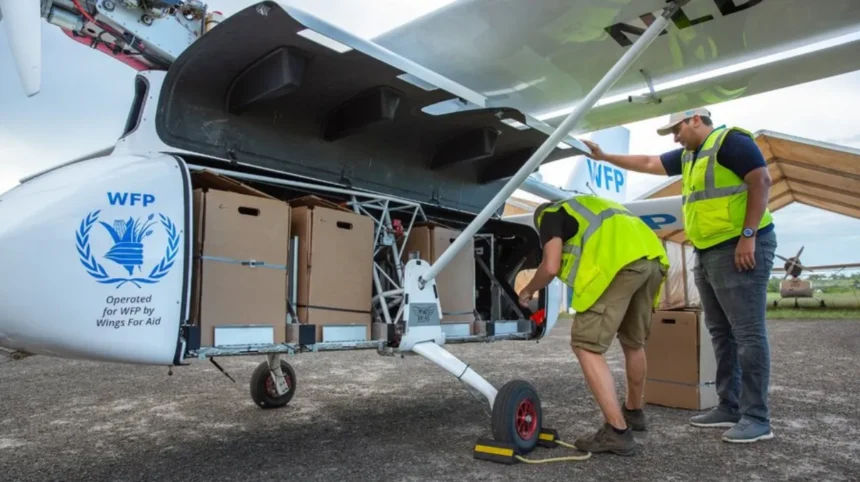
Air deliveries have provided critical relief, transporting shelter kits, food supplies, and medical equipment to isolated populations. However, Sudan’s geographic vastness complicates these efforts, requiring extensive coordination and multiple staging points to reach dispersed communities.
Disease outbreaks intensify urgency
The outbreak of cholera and other communicable diseases has added a new layer of urgency to humanitarian operations. Airlifts have enabled the rapid deployment of vaccines, water purification systems, and sanitation supplies, helping to contain outbreaks in high-risk areas.
This dual role addressing both conflict-induced displacement and public health emergencies demonstrates the versatility of air-based logistics. Yet it also highlights the strain placed on limited resources, as agencies must continuously prioritize between competing needs.
Operational realities and financial constraints of humanitarian aviation
The financial burden of maintaining UN flights lifelines is substantial, with individual missions costing hundreds of thousands of dollars. As global humanitarian funding faces increasing pressure, particularly following major commitments in 2025 to crises such as Ukraine, sustaining these operations presents a significant challenge.
Donor fatigue has become a recurring concern, with funding gaps threatening to reduce flight frequency and coverage. While contributions from states and private actors have helped bridge some deficits, the long-term viability of large-scale air operations remains uncertain.
Security coordination and risk mitigation
Operating in active conflict zones requires extensive security planning. Humanitarian flights must navigate no-fly zones, coordinate with multiple armed actors, and ensure the safety of personnel and cargo. Advances in tracking technology and pre-flight clearance mechanisms have improved operational safety, reducing incidents compared to earlier phases of conflict.
Nevertheless, the risks remain significant. The increasing militarization of airspace in regions like the Middle East and North Africa complicates flight planning and underscores the need for continuous diplomatic engagement to secure humanitarian access.
Interconnected crises and evolving humanitarian strategy
The simultaneous crises in Lebanon, Gaza, and Sudan have forced humanitarian agencies to adopt a triage approach to resource allocation. Decisions about where to deploy limited air assets are shaped by a combination of urgency, accessibility, and potential impact.
This interconnected dynamic reflects a broader shift in global humanitarian strategy, where agencies must balance immediate life-saving interventions with longer-term resilience planning. The reliance on air operations, while effective in the short term, does not address the underlying drivers of these crises.
Innovation and adaptation in aid delivery
Since 2025, humanitarian actors have experimented with new technologies and delivery methods to enhance efficiency. Drone-assisted distribution, improved satellite mapping, and integrated logistics platforms have all contributed to more effective use of air corridors.
These innovations suggest a gradual evolution toward more adaptive and technologically driven humanitarian systems. However, their success depends on sustained investment and the ability to operate within increasingly complex political and security environments.
Strategic implications for future humanitarian responses
The growing prominence of UN flights lifelines signals a shift in how the international community responds to protracted crises. Air operations have proven capable of sustaining critical aid flows in environments where traditional methods fail, but they also expose the limitations of a system forced to operate under constant constraint.
As conflicts persist and new crises emerge, the reliance on aerial logistics may continue to expand. Yet the effectiveness of this approach will ultimately depend on whether it is complemented by broader political solutions that restore access, rebuild infrastructure, and reduce the need for emergency interventions.
The trajectory of these operations raises a deeper question about the future of humanitarian action: whether the international system will adapt to increasingly restricted environments through innovation and resilience, or remain locked in a cycle where lifelines from the sky substitute for the absence of lasting peace on the ground.