Peacekeeping operations at the international level, which have been seen as the cornerstone of conflict resolution across the globe, are currently hanging by a thread with regards to their effectiveness in maintaining world peace. In this regard, the Stockholm International Peace Research Institute (SIPRI) has come out with a warning saying that peacekeeping operations around the world are in danger because of the dangerous cocktail of international geopolitics at stalemate levels, lack of funding, and record low number of personnel.
The combination of all three pressures results in what SIPRI experts term “a perfect storm” that puts the viability of peace missions led by the United Nations in jeopardy. With great powers still engaged in strategic rivalry and aid countries becoming fiscally tight, the ability to prevent, control, and manage conflicts continues to decline dangerously.
Personnel at a 25-Year Low
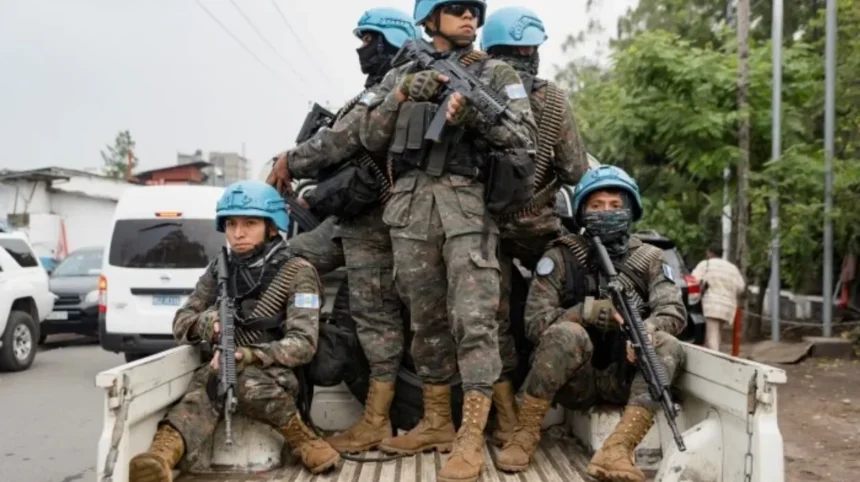
The impact of the human aspect is most obvious through the dramatic reduction of the peacekeepers’ deployment. As reported by the latest statistics from SIPRI, the number of peacekeepers’ personnel has reached its historical minimum in at least 25 years and now totals about 78,633 peacekeepers working under all UN peacekeeping missions as of late 2025. That indicates a decline of 17 percent compared to the previous year, while since the peak in 2016, the decline reaches 49 percent, where more than 150,000 personnel had been engaged in peacekeeping missions around the globe.
The decrease is not consistent in all UN missions, but the trend can be easily identified. Nine out of eleven UN peacekeeping missions show a decrease in the personnel number, with certain missions reducing the number of peacekeepers by up to 25 percent in uniforms and civilians.
“We are witnessing the hollowing out of peacekeeping,”
said a senior SIPRI researcher involved in the analysis,
“$2 billion in funding gaps combined with political paralysis is forcing missions to scale back operations precisely when conflicts are intensifying.”
The reduction in personnel can be attributed to the overall difficulties in recruitment due to the fact that each contributing country has its own internal problems; besides, there are always security issues for the troops, and peacekeeping has become increasingly ineffective with rising political uncertainty. Countries that used to be dependable donors now find themselves in doubt, while some simply lack the financial capacity to contribute.
The Funding Crisis Deepens
Financial limitations have become the most pressing threat to sustainability in peacekeeping. The UN peacekeeping budget currently stands about $2 billion below expectations, requiring deep cuts to be made in field missions. These financial limitations arise from late payments and cutbacks in the amounts paid by the primary funders of peacekeeping efforts, such as the US, the biggest contributor to UN peacekeeping efforts.
These financial difficulties have led to a range of problems. Peacekeepers are being ordered not to conduct planned patrols, cutting down on political work, and even closing some field offices. The result is that some regions are completely lacking a presence of peacekeepers. It is clear from official statements that this is not a short-term problem that will resolve itself.
“The funding shortfall is not just a budgetary issue; it is a crisis of political will,”
stated a UN official familiar with internal assessments.
“When major powers fail to fulfill their financial commitments, they are essentially voting against the effectiveness of multilateral conflict prevention.”
This is made worse by the reality that the cost of maintaining a peacekeeping force has become more expensive because of inflation, new security demands, and the nature of contemporary conflicts that frequently involve non-state actors and terrorists. At the same time, donor countries have started to divert their funds towards domestic concerns or bilateral security initiatives.
Geopolitical Deadlock Paralyzes Decision-Making
Apart from funding and personnel, the political framework of peacekeeping operations is beginning to disintegrate in the face of renewed geopolitical competition between great powers. The United Nations Security Council, which has the mandate to authorize peacekeeping operations and extend their duration, has increasingly found itself unable to act because of vetoes and disagreements among its permanent members.
This is how geopolitical tensions affect peacekeeping. Peacekeeping operations have been forced to take a back seat amid conflicts in places such as Ukraine and Gaza due to the fact that major powers are preoccupied with competing against each other. It is safe to say that this has marked the end of an era for peacekeeping, which used to be a widely supported undertaking in the past.
“The Security Council is gridlocked, and peacekeeping is paying the price,”
observed a diplomatic source who requested anonymity.
“When permanent members cannot agree on basic principles, missions get caught in the middle, their mandates become ambiguous, and their effectiveness evaporates.”
Geopolitical factors also play a role in the willingness of contributing nations to send their people. They are less willing to send their forces to a mission that lacks political support or one that might make them liable to reprisal from any nation that feels threatened by them.
The Human Cost of Institutional Failure
The decrease in peacekeeping capabilities has clear repercussions for civilians residing within conflict regions. Peacekeepers serve important functions in helping civilians avoid violent conflicts, ensuring humanitarian access, observing human rights violations, and participating in political affairs. When these efforts become less effective or even cease to function entirely, civilians face the brunt of the consequences.
Recent accounts from conflict regions suggest a link between decreasing numbers of peacekeepers and heightened threats against civilians, breakdowns in ceasefires, and lack of humanitarian access. Civilians who were dependent on the protection of peacekeepers in places like South Sudan, the Democratic Republic of Congo, and Mali have now become targets for attacks from armed militias. On a psychological level, civilians who had grown to rely on the protection of international peacekeeping forces now feel betrayed by their withdrawal.
“Every reduction in peacekeeping capacity translates directly into increased suffering for civilians,”
warned a humanitarian coordinator working in an African conflict zone.
“When patrols stop, when protection posts close, when mediators leave, armed groups fill the vacuum. The cost is measured in lives lost.”
The long-term consequences extend beyond immediate violence. Peacekeeping missions often serve as bridges to political solutions, creating the space necessary for negotiations, elections, and reconciliation processes. When these missions weaken, political processes stall, conflicts become protracted, and the prospects for sustainable peace diminish.
A Shift Toward Militarization and Unilateralism
SIPRI’s analysis warns that the decline of multilateral peacekeeping may catalyze a broader shift toward militarized responses and unilateral interventions. As UN missions lose capacity, regional organizations and individual states may fill the gap with their own approaches, often prioritizing military solutions over political ones. This trend could fundamentally alter the nature of international conflict management.
The implications are concerning. Unilateral or ad hoc interventions typically lack the legitimacy, oversight, and comprehensive approach that characterizes UN peacekeeping. They may be more reactive than preventive, more militarized than political, and more focused on short-term security than long-term stability. The erosion of multilateral frameworks could also weaken international norms around civilian protection, human rights, and the rules of engagement.
“We risk moving from a system based on multilateral consensus to one driven by power politics and military might,”
said the senior SIPRI researcher.
“That is a dangerous trajectory that will make conflict resolution harder, not easier, and will disproportionately harm vulnerable populations.”
Regional organizations like the African Union have expressed willingness to take on greater responsibility but face their own funding and capacity constraints. Without robust international support, regional approaches may struggle to match the scope and effectiveness of traditional UN peacekeeping operations.
What Must Happen Next
Tackling the peacekeeping challenge will require efforts along several fronts. Firstly, the donor countries need to live up to their financial pledges and find creative solutions to raise the missing $2 billion. It is important for them not only to clear any arrears but also provide multi-year contributions that can be used in planning.
Secondly, the Security Council needs to figure out how to break through the impasse and reach agreements based on the principles of peacekeeping. Such an outcome can only be achieved if the permanent members demonstrate political resolve by putting conflict resolution above competition.
Third, the international community must address recruitment and retention challenges by improving conditions for peacekeepers, enhancing training, and developing new models of civilian-military integration. Contributing countries need support to manage risks and ensure their personnel can operate effectively in complex environments.
“The choice is clear: we can invest in peacekeeping and prevent conflicts, or we can pay far more later for military interventions and humanitarian crises,”
stated the UN official.
“The cost of action is far less than the cost of inaction.”