The World Health Organization’s alert regarding Venezuela’s weakened health care system following the earthquake situation cannot be seen merely as a regular report on a disaster event. Rather, it serves as a concrete indication that there is now a layered emergency taking place in the country with an already vulnerable health care system through a combination of structural destruction, manpower problems, overcrowding, and public health challenges. The earthquake disaster has not just caused injuries and physical damage; it has revealed the lack of resilience within an already stressed health care system.
According to WHO, the country’s health system is currently facing some difficulties since some hospitals have been affected, and there is limited capacity in the affected regions. This is very important since emergency response to an earthquake is not only about handling the trauma cases immediately after the disaster. Other elements such as maternity services, surgery, infections control, immunization, and fast-moving of people through the process are equally important in responding to an earthquake disaster.
The situation is especially concerning because the disaster hit communities where access to care was already uneven. WHO’s description suggests a system that is still functioning in places, but functioning under stress rather than with stability. That difference is crucial. A health service can be open and still be unable to absorb a surge in injuries, pregnancy complications, or disease risks. Venezuela appears to be in exactly that position.
Damage to Facilities and Care Gaps
WHO’s initial assessment of 21 health facilities provides a comprehensive illustration of the pressure being faced on the ground. According to the agency, at least three facilities are severely damaged, with six more damaged or partially functional. This means that about one-third of the total facilities are either severely impaired or are not operating at full capacity, an issue that presents a challenge in times of emergency. Moreover, the damages are not limited to infrastructures alone. According to WHO spokesman Christian Lindmeier, the initial findings reveal the overcrowding of facilities in affected areas and increase in surgical backlog. This is significant since the issue is not just about the number of remaining facilities available. The issue is also about the speed of treatment, scheduling of procedures, and managing the patients who have been injured without bringing down the entire hospital due to the pressure.
Lindmeier also highlighted a more specific and alarming gap: in La Guaira, some maternity specialists are missing. In a disaster zone, the loss of obstetric care can become a second emergency inside the first one. Pregnant women still need safe delivery services, emergency interventions, and monitoring, and when specialists are absent the risk rises sharply for both mothers and newborns. That is one of the clearest examples of how disasters can turn routine health needs into life-threatening vulnerabilities.
Disease Risk and Displacement
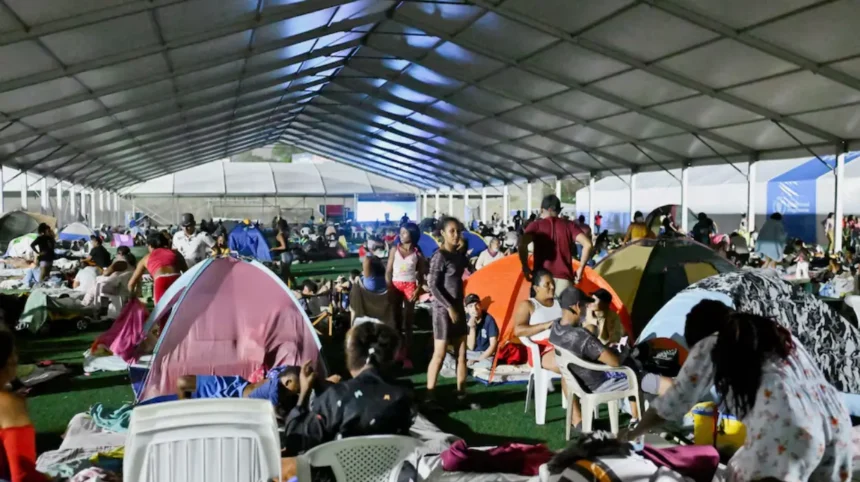
Beyond the immediate injuries caused by the earthquakes, WHO warned about the public-health consequences of displacement. People forced out of their homes often end up crowded into shelters or temporary living spaces where sanitation, clean water, and infection control become harder to maintain. In that environment, diseases can spread more easily, especially when vaccination coverage is low.
WHO was the particular agency which pointed out the dangers of disease epidemics like yellow fever and dengue. The significance of this statement is that it shows that WHO thinks more than only about treatment of trauma and considers the possibility of preventing epidemics. Earthquakes usually lead to immediate orthopedic injuries, wounds, and crush trauma, but the greater threat lies in mosquito-borne or vaccine preventable diseases if conditions in shelters worsen.
This also helps explain why the health system strain is so serious. Hospitals that are damaged or overcrowded have less capacity to monitor, isolate, vaccinate, and respond to possible outbreaks. In other words, the earthquake response and the outbreak response are now linked. If one fails, the other becomes harder to contain.
A Fragile System Hit at the Wrong Time
These earthquakes were not the cause of any deficiencies in Venezuela’s healthcare system from the ground up. These were just the events which revealed the weaknesses that existed before them. Reporting on this situation indicates a vulnerable health care system which was already being run with scarce resources and which made its response to the increased number of casualties extremely difficult. This information is crucial since it is vital to have some kind of resilience in a system long before the occurrence of a disaster. A resilient health care system can distribute staff, mobilize capacities and continue functioning despite any kind of shock. Venezuela’s situation seems to belong to the latter group.
The broader reporting also points to shortages in emergency response capacity, including limited ambulance availability and long-term underinvestment. These are not minor logistical problems. They affect how fast injured people reach care, whether critical cases survive the journey, and how well authorities can move supplies and staff to the places that need them most. In disaster medicine, speed saves lives, and every bottleneck becomes more dangerous when a system is already stretched.
Rescue and Humanitarian Response
This health crisis occurs amid a broader humanitarian crisis. Rescue teams pulling victims from the ruins and conducting search and rescue operations even several days after the quake have been reported in other sources on the earthquake relief. It implies that the scope of the catastrophe is still being developed, and it is quite possible that the health crisis will further develop because of injuries discovered or additional problems occurring. The needs of displaced families and children have also been pointed out by humanitarian organizations. According to UNICEF, hundreds of thousands of children require assistance after the quakes. It indicates that there is not just the health crisis taking place in hospitals but there is also a humanitarian one affecting all people in the area.
This broader context is important because public health emergencies are rarely confined to one sector. A damaged hospital, a displaced family, and an overcrowded shelter are all part of the same crisis chain. That is why WHO’s warning should be read as both a medical update and a humanitarian alarm.
What WHO’s Warning Really Means
WHO’s wording signals urgency without overstating the situation. By saying the health system is under significant strain, the organization is acknowledging that services have not completely failed, but they are no longer operating normally. That distinction matters for planning. It means the priority is to prevent deterioration rather than wait for collapse.
The alert also implies that there should be a more focused approach. Hospital infrastructure will have to be repaired and strengthened, but in the short run, the following things might be required – emergency surgery, provision of maternal health services, disease monitoring, vaccinations, and mobile clinics. Under the circumstances, even regular diseases or pregnancies might become threatening as the patients will not be able to receive proper medical attention on time. From the point of view of disaster journalism, this is the moment when one shifts from covering destruction to focusing on stress to the system. Earthquakes are events, but what the real challenge is the capacity of the health care system to operate and rebuild simultaneously. According to WHO, the challenge is already here.
The Larger Public-Health Stakes
The biggest concern now is not only what has already been damaged, but what could follow if the system remains overloaded. Overcrowding increases the chance of infection. Missing specialists reduce the quality of care. Delays in surgery worsen outcomes. Low vaccination coverage opens the door to preventable outbreaks. These pressures can compound quickly in a post-earthquake environment.
Venezuela’s situation also shows how disaster response depends on institutional depth. Countries with stronger public-health systems can often isolate a localized disaster and prevent it from spreading into other health sectors. In a strained system, one problem tends to trigger another. That is why WHO’s concern about yellow fever and dengue matters so much: it shows the organization is worried about a secondary crisis emerging from the first.
The core lesson from this event is that earthquakes do not just destroy buildings. They also test the limits of every public service underneath them. In Venezuela, the health system appears to have reached a difficult threshold, where surviving the immediate disaster is only part of the challenge. Keeping basic care running in the days and weeks after the quake may prove just as important.