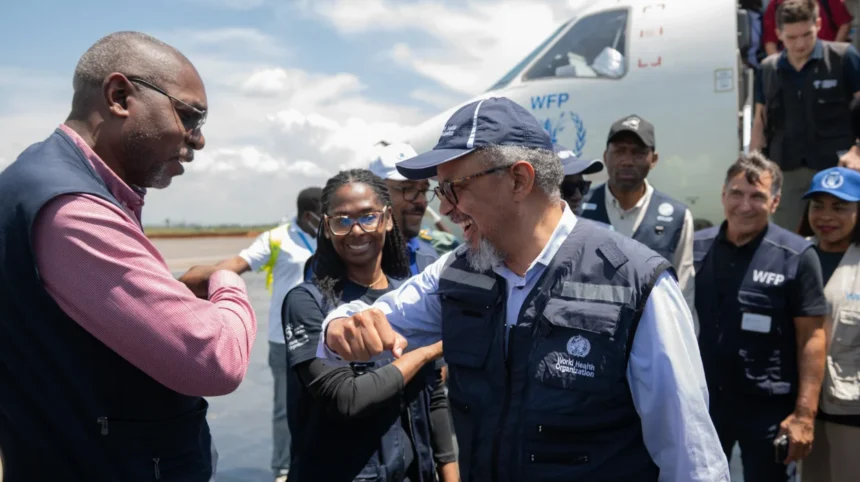
The director general of WHO, Dr. Tedros Adhanom Ghebreyesus, landed in the Democratic Republic of Congo on Thursday, May 28, 2026, and this is a very crucial time for the international community in regard to the 17th outbreak of the disease that the nation has been struggling with. The arrival of the world leader in Kinshasa, followed by his intended visit to the Ituri province, where the current Bundibugyo strain outbreak is taking place, highlights the gravity of the situation, which has already caused more than 200 deaths.
This mission arrives in the midst of an epidemic that has affected three different health districts within Ituri, with confirmed cases reaching 121 and 17 confirmed deaths, while there have been 246 deaths suspected to be caused by the disease. The Bundibugyo virus, which is not prevalent in DRC’s Ebola epidemics, poses certain difficulties regarding control and cure of the disease. What makes this epidemic more worrisome than others is that it has taken place in a distant and war-ridden area.
The Outbreak’s Devastating Impact on Ituri Province
Scale and Scope of the Crisis
This outbreak is affecting Ituri province in particular, with 90% of the sick people currently undergoing treatment in this province only. This Ebola outbreak occurred on 15 May 2026, as per the reports of Africa CDC. The outbreak has quickly spread from gold mining areas like Mongwalu and Rwampara, where most of the people who contracted the virus reside.
However, epidemiological analysis shows worrying trends. As many as 80 people have reportedly lost their lives by May 16, which only happened a day after the official announcement of the outbreak itself, showing how rapidly the disease spread. On May 28, 17 deaths were confirmed; however, based on the 246 deaths suspected, we can conclude that the real numbers may be substantially larger due to lack of testing facilities in inaccessible regions.
A total of 13 blood specimens were analyzed with 8 results being positive. The rest of the specimens could not undergo testing since there was not enough material available, showing once again how crucial the need for adequate laboratory facilities is in such regions
The Rare Bundibugyo Strain
One thing that makes the outbreak unique to those before it in the DRC is the pathogen. The Bundibugyo strain, which is named for the district in Uganda where the pathogen was first discovered in 2007, is not as deadly as the other strains in the past in DRC, specifically the Zaire strain, but this does not mean that the pathogen is not dangerous.
This is the first time there has been an outbreak of this strain in the DRC, so medical treatments and vaccines developed may not have full effect. It is unclear whether the strain originated in Ituri or if this is another case of zoonotic transmission, especially in light of the cross-border activity in eastern Congo.
Security Challenges Compounding the Health Emergency
Armed Violence in Ituri
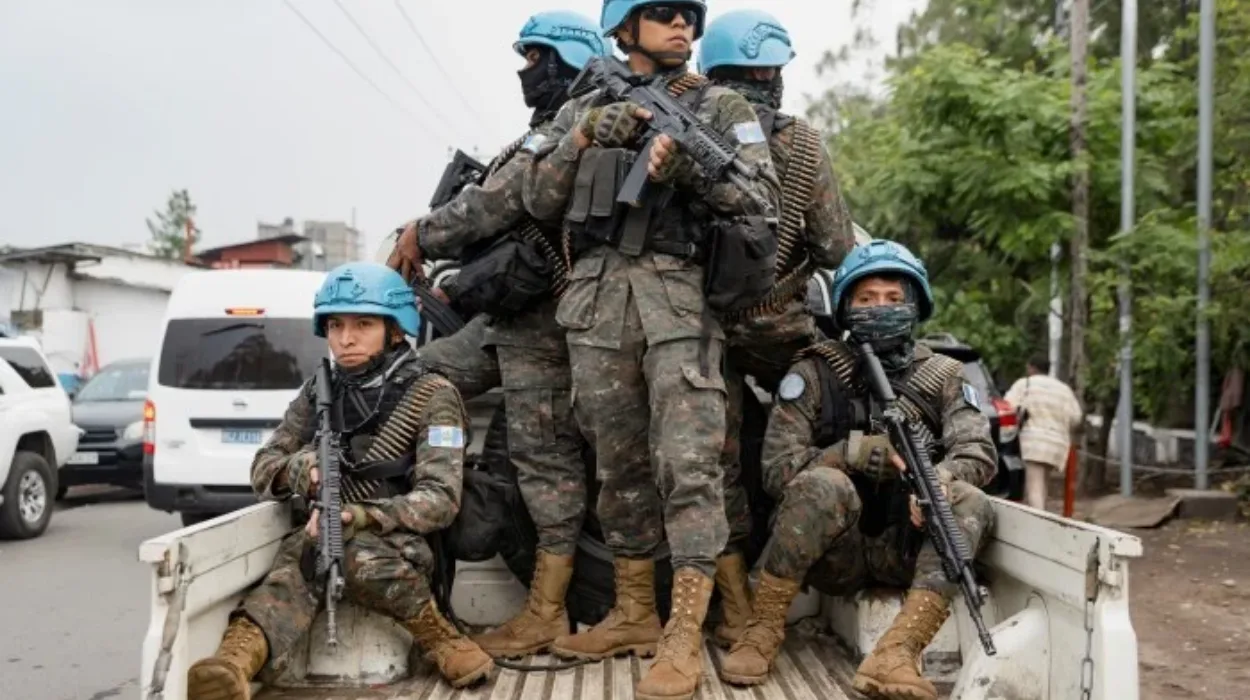
This epidemic is occurring in one of the most unstable parts of eastern Congo. In early May 2026, just weeks prior to when the outbreak occurred, the ADF rebels had murdered at least forty individuals and torched several houses in the province of Ituri. The instability in the region has forced people to flee their homes, disrupt logistics, and create an incredibly difficult situation for health officials to get access to infected areas.
It presents an incredibly dangerous atmosphere for medical personnel and patients alike since the doctors are facing two kinds of danger – contracting the virus and being victims of violent attacks. In addition to that, some places are entirely out-of-bounds for investigation and treating patients due to the ongoing conflict. The ADF is a Ugandan rebel force working in eastern Congo, and they are known to attack medical facilities.
Distrust and Community Resistance
Beyond armed violence, the outbreak response faces another critical obstacle: deep-seated distrust of medical personnel among local communities. This distrust has roots in previous Ebola outbreaks in the region, where misinformation, cultural practices, and past failures in health interventions created lasting skepticism.
Cases of community members hiding sick relatives from being taken to centers for treatment are on the rise; even health workers attempting to access such villages have been denied entry. Such conduct greatly undermines any efforts towards contact tracing and early detection, which are necessary in stopping the chain of transmission.
Health workers operating in Ituri region are faced with the problem of lack of equipment, which includes PPEs, test kits, and medications for the patients. This not only increases chances of infections among health workers but also decreases the quality of care offered to the patients. The problem of lack of equipment is even more prevalent in isolated areas due to disruptions in supply routes caused by violence.
WHO Chief’s Stance and Strategic Response
Dr. Tedros’s Key Messages
Dr. Tedros Adhanom Ghebreyesus has made several powerful statements since announcing his visit to Congo.
“Ebola is back. Ituri province is bearing the brunt,”
he declared on X, emphasizing the severity of the crisis and the disproportionate impact on Ituri. This statement underscores the WHO’s recognition that the outbreak is concentrated in one of the region’s most vulnerable provinces.
Upon arrival in Kinshasa, the WHO chief delivered a message of solidarity:
“I want you to know that you are not alone.”
He posted this on X to the people of Ituri, signaling international commitment to supporting the response effort. This message is particularly important in a region where communities often feel abandoned by both their government and the international community.
Dr. Tedros also expressed confidence in the potential for containment, stating “Ebola can be stopped” as he arrived to oversee the fight against the highly infectious disease. This statement serves both as reassurance to affected communities and as a call to action for international partners to maintain momentum in the response.
Recognition of Healthcare Workers
WHO’s head has never failed to acknowledge the key role of the healthcare professionals in fighting this epidemic. “Healthcare workers in Ituri are the backbone of this response,” WHO’s director, Dr. Tedros stated. The significance of this statement comes in light of the fact that the healthcare professionals in Ituri are operating in very challenging and dangerous conditions.
By visiting Bunia, the capital of Ituri, he will be able to personally observe how the response efforts work and discuss the issues with the local healthcare professionals. This action is unique for the representatives of the World Health Organization, which clearly reflects the importance of this outbreak for the organization and how seriously WHO perceives it.
International Response and Resource Mobilization
WHO’s Pre-Deployment Actions
Prior to the arrival of Dr. Tedros, WHO had already shown initiative in addressing the situation. A team was deployed to Ituri during the week of May 15 in order to determine the scope of the outbreak and gather blood samples for testing in a laboratory setting. This timely response shows the realization of WHO of the possible spread of the outbreak and their intention to contain it at an early stage.
The work of the team sent by WHO to investigate the outbreak was essential in determining the cause of the problem, and even finding out which strain is involved; however, their actions have also been hindered by the same problems that affect other agencies in the area.
Broader International Mobilization
This visit by Dr. Tedros is also part of a larger international effort, which involves support from various partners, including both technical and monetary assistance. This UN agency has been working alongside the government of the DRC, Africa CDC, as well as other international public health organizations in an attempt to gather resources to manage the outbreak. This is why the arrival of the head of WHO is crucial at this point because it will help gain more support from the international community.
Nevertheless, all efforts from the international community are contingent upon the security situation in Ituri Province, as without this factor being addressed, resources may not necessarily solve the problem.
What This Outbreak Reveals About Global Health Security
Persistent Vulnerabilities in DRC
This 17th outbreak of Ebola in DRC is showing gaps in the health infrastructure of the country even after several years of dealing with outbreaks of Ebola. This outbreak has shown that even after so many years, there have been no positive changes in health infrastructure in Eastern Congo.
The lack of equipment, lack of testing facilities, and the issue of security in Ituri, all these problems faced by the medical team here, have been seen in other Ebola outbreaks in the region.
The Intersection of Health and Conflict
This situation is one of the cases showing the complicated interplay between health emergency and the state of conflict. The Ebola intervention taking place in Ituri is being conducted in an environment of war, where health care providers face danger from not only the disease but also the presence of armed individuals.
What happens in Ituri illustrates the price of long-term conflict in terms of human lives. Due to the years of fighting in Eastern Congo, the region is prone to infectious diseases. Health care systems have been weakened, and people have been displaced, thus creating favorable conditions for infection spreading.
Critical Factors for Success
Several important things need to happen for the successful response to the Ebola epidemic in Ituri to be achieved. Firstly, secure access needs to be provided for health care professionals to enter the affected communities, trace contacts, and deliver adequate treatment. Without the access, the epidemic will remain unnoticed.
Secondly, the process of community involvement is crucial in order to counter the resistance and mistrust of the medical assistance. Culturally sensitive approaches are necessary to build community confidence and identify the reasons for resistance. It was proven previously that in some cases community willingness can play a bigger role than the medical assistance.
Third, expanded laboratory capacity and testing capabilities are needed to accurately assess the outbreak’s scope and monitor transmission. The current limitation of only 13 samples examined is insufficient for effective surveillance and response coordination.