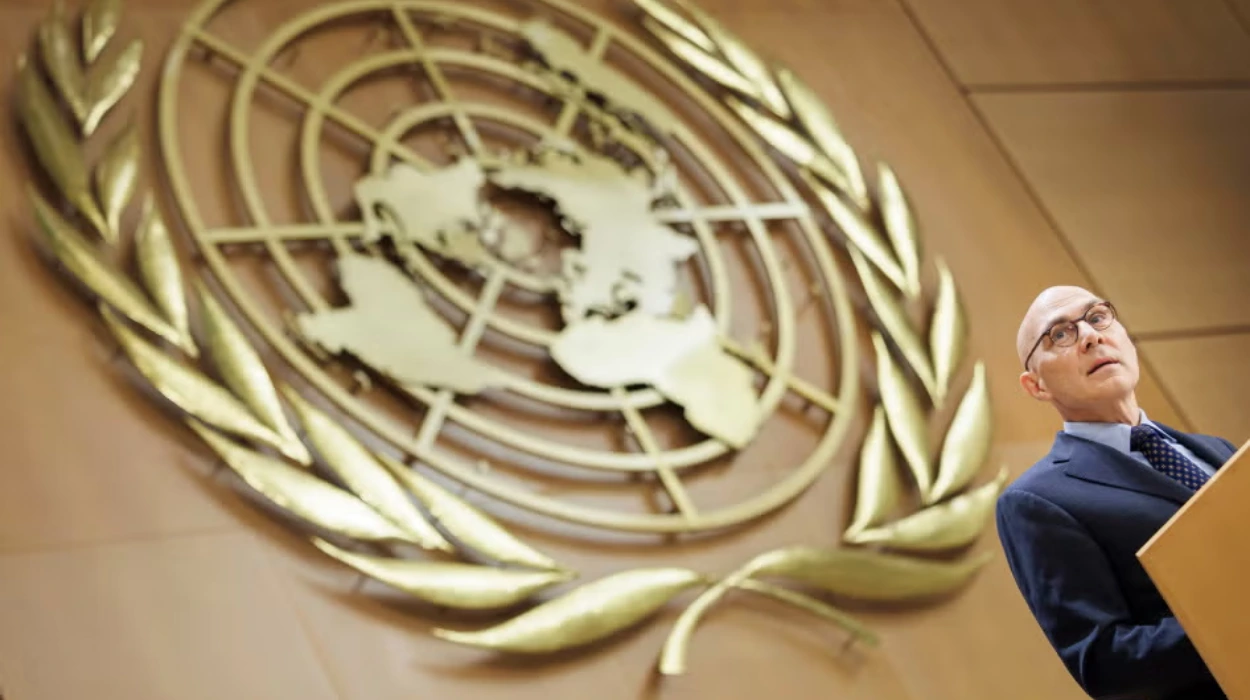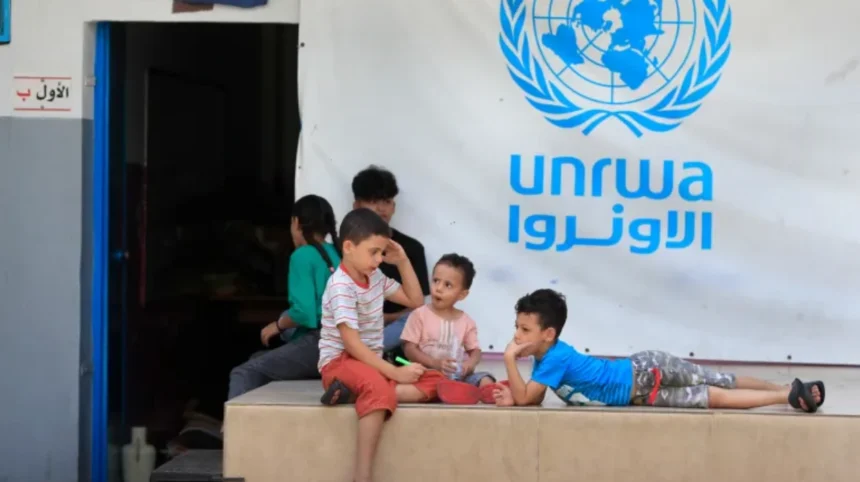
The United Nations Secretary-General António Guterres is issuing a dire warning regarding the fate of millions of Palestinians due to serious financial problems that the UN agency, UNRWA, is facing. This is especially important considering how fragile the humanitarian situation in the whole of Gaza is, and considering how UNRWA is currently struggling under serious pressure, scrutiny, and restrictions. The warning by Guterres is not just about a problem related to the budget of the agency; it is about how the failure of UNRWA could lead to a collapse of humanitarian assistance for this population.
The latest alarm centers on a $100 million funding gap, which UN officials say threatens UNRWA’s ability to continue essential services. According to the reporting, the agency serves 5.9 million Palestine refugees, making it one of the most important humanitarian lifelines in the region. In that context, the Secretary-General’s concern reflects a wider fear that if donor support does not arrive soon, the consequences will be felt far beyond UNRWA’s balance sheet.
Why UNRWA matters now
UNRWA is not just another UN body with a specific mandate. This agency has been providing education, health, relief, and other social services to Palestinian refugees for decades now, and its importance is growing further with all the war and displacement going on in the region. It has been called a “critical platform” for the recovery of Gaza, which shows just how important this organization is for any future response to the situation there. The sheer number of people this organization is serving makes the problem of lack of funding especially grave. Whenever this agency speaks of serving millions of refugees, it is not about a hypothetical threat but a concrete one. It means that any lack of funding can lead to immediate cuts, staff reductions, and limited activities.
Guterres’ warning and language
Guterres has taken a notably forceful tone in defending UNRWA and calling on donors to act. He has warned that the agency is nearing a breaking point and has urged countries to help close the financial gap. His remarks suggest that the shortfall is not just a normal budget challenge but a crisis that could unravel an already strained humanitarian system.
He also rejected the negative political narrative surrounding the agency, denouncing “disinformation, smear campaigns” against UNRWA, according to the reporting.
The language is crucial in understanding the way the agency’s financial struggles are linked to an ongoing attack and criticism campaign. In other words, the UNRWA has been faced with not only a funding crisis but also with a legitimacy challenge. Guterres made similar comments in his previous speeches about the fact that there was no substitute for the agency. The language is crucial in this situation because it helps to see the problem as an imperative one rather than as one of choice. There is no other organization ready to absorb all the duties of UNRWA.
The figures behind the story
The numbers are central to understanding the crisis. The reported $100 million gap is large enough to disrupt operations immediately, especially for an agency already under strain. At the same time, UNRWA’s service base of 5.9 million Palestine refugees shows why the shortfall has outsized humanitarian implications.
Among the statistics presented in the reporting, one of the scariest is the statistic on how many UNRWA employees have lost their lives in Gaza since October 2023. This shows how vulnerable UNRWA itself has become to the violence it tries to prevent. This also highlights the risks involved with conducting humanitarian operations in an active war zone, where the aid workers themselves are also prone to being victims of violence. The increasing scale of the needs of the refugees has also to do with the situation in the region at large. According to the reporting, there has been a growing level of settler violence in the occupied West Bank and Israeli airstrikes in Lebanon, where many of the Palestinian refugees have been seeking refuge.
Political pressure and access limits
Funding challenges facing UNRWA cannot be divorced from the political challenges associated with its activities. The organization has received severe criticism by Israeli authorities and their friends, and this has had an impact on the manner in which UNRWA conducts itself. The implication of the information presented here is that in addition to funding limitations, there are limitations in access and general hostility. This is important since humanitarian organizations depend not only on funds but also on being able to operate. When the funds decrease and the operational difficulties increase, the organization is faced with a double jeopardy. It becomes more difficult to provide services at a time when demands are increasing.
For Palestinian refugees, UNRWA is often the institution that fills the gap between crisis and basic dignity. When that institution is constrained, the effects ripple across education, food support, healthcare, shelter, and emergency relief. The current situation therefore raises concerns not only about present-day aid delivery but also about the longer-term stability of refugee communities.
Donor response and international stakes
The key question now is whether donor governments will step in quickly enough to stabilize UNRWA’s finances. The UN chief’s appeal is an attempt to prevent a chain reaction in which one shortfall leads to service cuts, which then produce more suffering, more instability, and more pressure on the humanitarian system. The urgency is heightened by the fact that the crisis is unfolding while other emergencies continue to compete for international attention and funding.
There is also something else going on here. International aid mechanisms may only be as robust as the will to support them. When an agency such as UNRWA faces controversy, the difficulty of financing increases despite increasing humanitarian needs. This is now evident in this situation, where the criticality of the role of UNRWA is quite evident but its financial stability remains questionable. In addition to this, there is a geographic context. The worsening state of affairs in Gaza, the West Bank, and parts of Lebanon implies that any problems related to UNRWA being inadequately funded will no longer be restricted to one particular location.
Humanitarian consequences
In the absence of bridging the funding gap, the most immediate consequence would probably be felt by the services. It may involve the cutting down of visits by the health team, decrease in the educational services and the emergency services of UNRWA for those refugees that require them for their existence. It should be noted here that since the agency is working in challenging circumstances even small cuts in services may result in big cuts very soon. The humanitarian consequences of the situation are not limited to the provision of services but go beyond it.
The warning from the UN chief is therefore best understood as a preventive alarm. He is trying to stop a humanitarian decline before it becomes irreversible. That makes the story one of crisis management as much as crisis reporting.
What the statements mean
The statements from Guterres and UN officials are notable because they combine urgency with political defense. By calling out disinformation and smear campaigns, the Secretary-General is signaling that UNRWA’s role should be judged by its humanitarian function, not by the political conflict surrounding it. By emphasizing the budget gap, he is also making clear that the issue is concrete and immediate.
His warning that millions of Palestinians are at risk is not rhetorical exaggeration. It reflects the scale of UNRWA’s mandate and the vulnerability of the people it serves. When a service provider of that size runs into a major financial crisis, the effects can be systemic rather than isolated.
The broader message is that aid shortages in a conflict zone do not remain administrative problems for long. They become human problems very quickly. That is why the appeal to donors is so urgent and why the warning has drawn global attention.