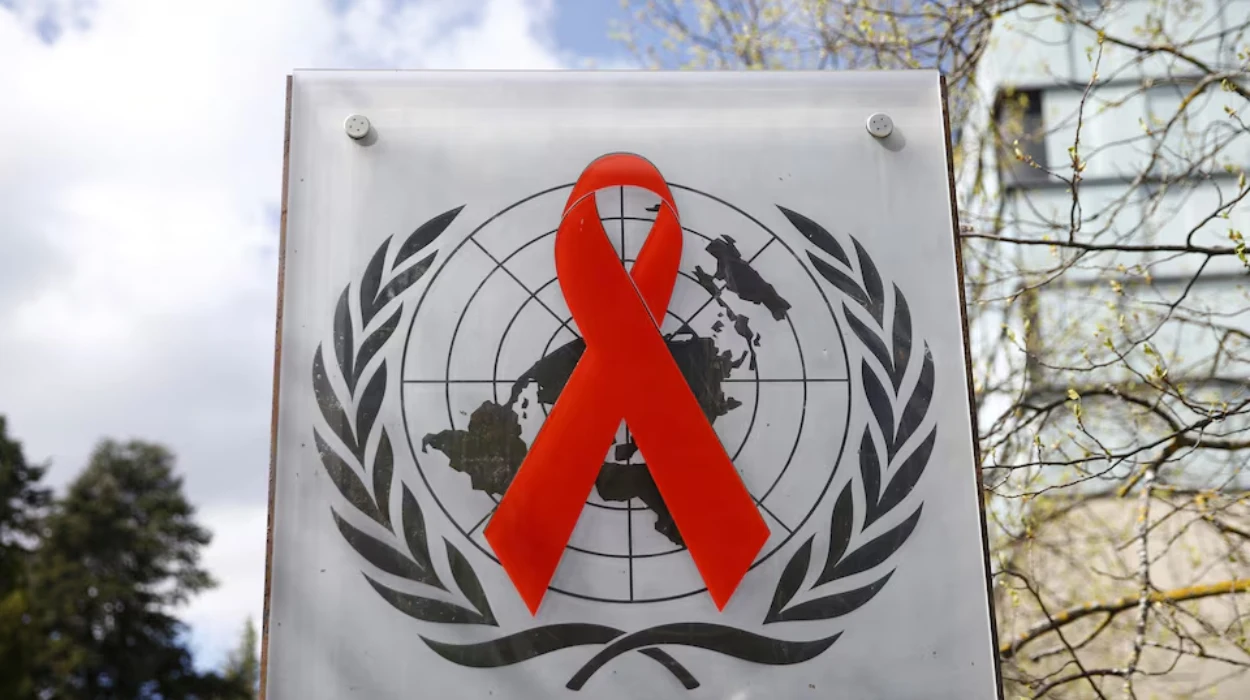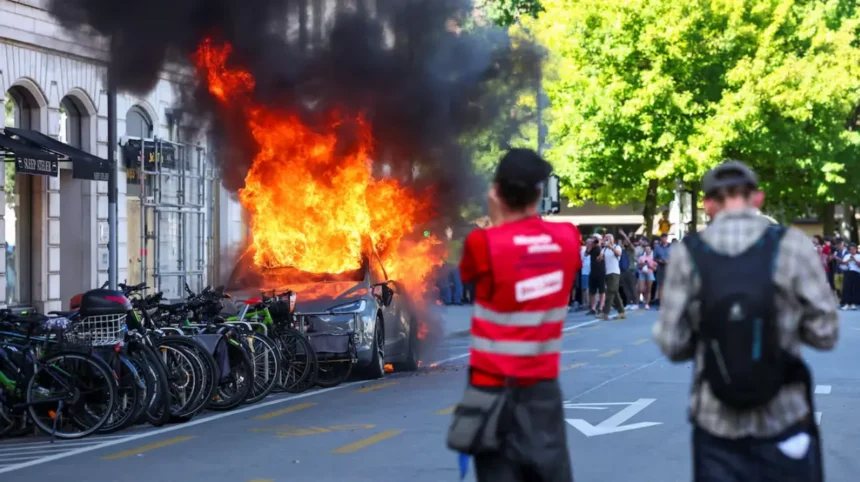
The situation took a turn for the worse on June 14, when a protest against the G7 turned from a festival-like demonstration into an armed confrontation, which resulted in smashed windows in the United Nations office building and a burned Tesla car. The violence was fueled by protests staged by thousands of people who were against the G7 summit that was supposed to start in the neighboring city of Evian-les-Bains in France on June 15. The Swiss authorities used water cannons and tear gas to suppress the riots.
The protest, which started peacefully with banners and flares, turned into chaos as soon as masked sections of the mob attacked the police, throwing firecrackers at them. Vehicles and barricades were set on fire, while the United Nations telecommunications headquarters became the target of these protesters. This violent demonstration reflected the anger of the activists against global inequality, capitalism, and ongoing conflicts.
The Spark: G7 Summit Preparations and Protest Resist
G7 Summit in Evian-les-Bains Sets Stage for Tensions
The G7 summit is planned in Evian-les-Bains, France, where the leaders of the most economically developed countries will meet to discuss pressing issues like economic security, environmental issues, and international security. Ahead of the G7 summit, there is an increased presence of security officers on the French border with Switzerland; therefore, this contributes to the heated environment in Geneva. The choice of the venue has attracted many activists who see G7 as a symbol of global power and economic disparity.
Protest Framing: Against Capitalism, Global Inequality, and Conflict
Those taking part in the Geneva march expressed their disagreement by critiquing aspects of capitalism, global inequalities, and international disputes. The atmosphere at the start of the demonstration was rather festive as protesters held the Palestinian flag alongside banners of the movement against perceived injustices. As the protest evolved, the mood became increasingly confrontational as certain factions focused on attacking the symbols of prosperity and multilateral organizations, including the UN headquarters and an electric car company.
Violence Unleashed: UN Office Windows Smashed, Tesla Torched
The Targeting of a UN Agency and a Tesla Vehicle
Among the most overt forms of violent acts committed by the protesters was the breaking of windows at a UN organization’s office building and the burning of a Tesla car. It is notable that protesters torched the Tesla, with such destruction being symbolic of the protesters’ hatred for technology and corporate wealth. The deliberate destruction of property at the UN organization shows that there are serious problems with international organizations and their governance.
Police Response: Tear Gas and Water Cannons Deployed
As the violence continued, Geneva police responded by using tear gas and water cannons against the crowd in order to quell the riots. The utilization of tear gas by the police was considered a step up from their normal tactics, showing how intense the riot had become. According to authorities, the rioters who were masked had been violent, lobbing fireworks and other objects at the police.
Crowd Size and Scale: Thousands March in Geneva
Massive Demonstrations Signal Growing Anti-G7 Momentum
It is estimated that about 20,000 people took part in the march that took place in Geneva on Sunday, emphasizing the extent to which there was dissent against the G7 summit. Such a large number suggests that there was quite an extensive participation from activists as well as local inhabitants who were concerned about the policies surrounding the world economy and politics.
From Festive to Violent: A Sharp Turn in Protest Dynamics
There was a quick change from an atmosphere that resembled a carnival into violence. In the early stages of the protest, people walked around with banners and flares, protesting against G7 leaders and their policies but in a peaceful manner. But as time went by, violence broke out between the masked protesters and the police officers. This is something that happens at most protests where there are many factions with varying objectives.
Global Context: Anti-G7 Movements and Historical Precedents
Anti-G7 Protests: A Longstanding Critique of Global Power
The G7 has attracted opposition from protesters over many years, and the criticism centers around the organization’s impact on economic policy and trade. In particular, the G7 has been seen as an avenue for developed nations to influence global policy without proper representation of developing nations. This has led to protests against the meetings organized by the G7, where protestors have taken aim at corporate icons and multilateral organizations.
Patterns of Protest Violence Around International Summits
The violence observed in Geneva is similar to that which is usually witnessed during international summit protests, which tend to start out peacefully but may end up as a confrontation between protesters and the authorities. Their targets range from companies, governments, and international organizations, among others, since activists find themselves frustrated with the state of affairs in the world today. Police have even been known to employ teargas and water cannons.
Statements From the Scene: Voices of Protest and Authority
Protesters’ Framing of Their Actions
Activists involved in the protest articulated their grievances clearly, framing their actions as a stand against what they see as systemic injustice.
“We are protesting against inequality, capitalism, and global conflicts,”
said one demonstrator, capturing the core themes of the march. This statement reflects the broader ideological underpinnings of the anti-G7 movement, which seeks to challenge the dominance of wealthy nations in shaping global policy.
Police and Authorities’ Response to Violence
Swiss authorities emphasized their commitment to maintaining public order in the face of escalating violence.
“Police are deploying tear gas and water cannons to restore order and protect public safety,”
stated a Geneva police representative, underscoring the seriousness of the situation. The use of force was justified as a necessary measure to prevent further destruction and ensure the safety of residents and demonstrators alike.
Implications for the G7 Summit and Global Dialogue
Security Concerns and Summit Preparations
The unrest in Geneva has increased security issues for the G7 summit at Evian-les-Bains. Security forces have been posted at the border in large numbers, and their activities will be closely monitored to ensure that there is no disruption to the summit. This situation highlights the problems associated with organizing such high-level international meetings in politically charged times.
Impact on Global Discourse on Inequality and Governance
The demonstrations have also contributed significantly to debates on issues of global inequality, capitalism, and the need for multilateral interventions to address such issues. The attack on the UN headquarters and on a car by Tesla shows that the G7 protests represent a political statement against an established order. With the summit continuing, these issues will remain important areas of global discussion.
What Comes Next: Aftermath and Future Protests
Immediate Aftermath in Geneva
In the immediate aftermath, Geneva authorities are assessing the damage to property and coordinating with local and international partners to address the fallout from the unrest. The incident has drawn widespread media attention, with outlets highlighting the contrast between the protest’s peaceful beginnings and its violent conclusion. Authorities are expected to review security protocols and consider measures to prevent similar incidents in the future.
Future Anti-G7 Mobilizations
The magnitude and passion with which protesters demonstrated against the G7 conference implies that such protests against the G7 conferences will only continue growing especially considering that global disparities will not diminish and that political tensions are expected to continue. Protesters will definitely take advantage of subsequent international meetings to air their grievances, forcing relevant authorities to come up with new tactics for managing such protests.