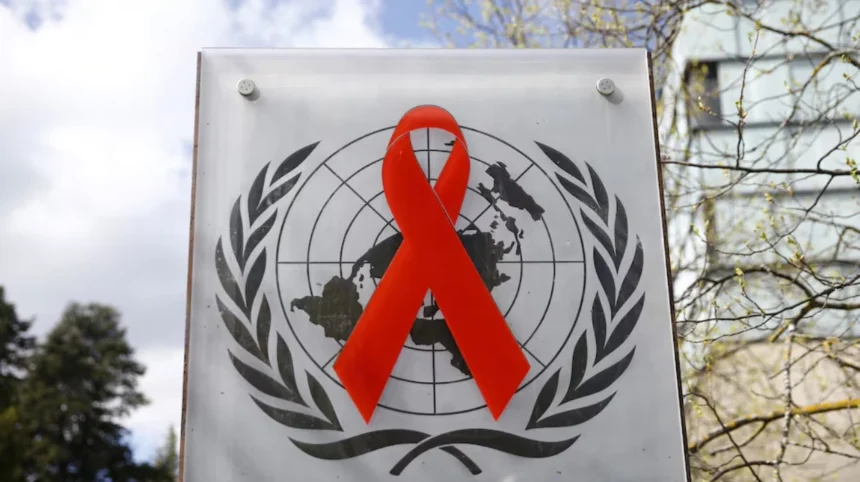
Global financial constraints have led to an immediate and quantifiable reduction in HIV prevention measures as shown by reports from UNAIDS which state that initial statistics suggest a steep decline in the availability of access to prevention measures and drugs. In line with the most recent analysis by UNAIDS, there was a significant reduction of nearly 40% in the provision of the HIV prevention drug known as PreP between 2025 and 2024 in 62 nations. This has been described as a concerning trend and poses serious threats to the success of the fight against HIV/AIDS in the future.
This decrease is mostly focused on prevention services, especially on PrEP and condoms. According to UNAIDS, preventive programs face the greatest impact of reductions in international aid funds, and their effects are visible now. According to the agency, in a number of countries, funding for condoms has reduced by more than 90%. It shows that prevention programs are crucial, as prevention is the main tool to prevent new cases of HIV infection, which means that without money for prevention, other indicators will also be impacted.
What UNAIDS Data Shows: The 38% Drop in PrEP Access
The core of UNAIDS’s warning rests on a clear, quantified trend: a 38% decline in PrEP uptake across 62 countries. In 2024, an estimated 3.3 million people received PrEP at least once. In 2025, that number fell to about 2.1 million — a loss of roughly 1.2 million people. This single service line collapsed by nearly 40% in a year. For a prevention tool that is designed to reduce new infections at scale, such a drop is unprecedented in the current era of the HIV response. The agency says this is not a statistical artefact; it is a real-world contraction in access.
UNAIDS emphasizes that the contraction is concentrated in services that are most vulnerable when funding tightens. PrEP is a high-priority prevention tool for people at elevated risk, including sex workers, people who inject drugs, and LGBTQ communities. When PrEP access shrinks, the most exposed populations are effectively cut off from the most effective biomedical prevention available. This is not a random loss; it is a targeted erosion of the backbone of HIV prevention. The agency’s data underscores that the 1.2 million-person gap is not just a number — it represents people wh]o are now unprotected and at heightened risk of infection.
The organization has also stated that the reduction does not apply to all regions equally, but the trend is evident in the sense that the prevention services are going down in places where budgets for such initiatives have been cut back. There are particular cases where the reduction is even more pronounced. According to UNAIDS, there have been instances where budgeting for condoms was reduced by over 90%. This is the effect of reducing budgets for prevention and allocating resources to curative services instead, or cutting back on prevention measures in times of financial crisis.
Why Funding Cuts Are Hitting Prevention Hardest
UNAIDS attributes the sharp drop in prevention services to global aid funding cuts that have disproportionately affected preventive programming. The agency explains that when donors reduce budgets, prevention is often the first line to be cut — because prevention outcomes are harder to measure in the short term, and because prevention does not generate the same immediate political visibility as treatment. This is a classic mistake in public health financing: when budgets shrink, the most vulnerable, least-visible services are sacrificed first. The result is a long-term cost that exceeds the short-term savings.
It is also noted that the reduction can be associated with worsening conditions regarding the state of human rights, which negatively affects prevention among key populations. Increased backlash to LGBT rights, in particular, creates obstacles to successful implementation of prevention initiatives because, in a situation where LGBT community suffers persecution of any kind, prevention programs get stigmatized, limited, or even closed. UNAIDS claims that the problem with rights adds to the problem with funding and results in a dual barrier to access to prevention.
UNAIDS Executive Director Winnie Byanyima stresses that the AIDS response is experiencing its biggest disruption since the onset of the epidemic. She claims that the disruption is so significant that it should be addressed. The message of the organization is unambiguous: AIDS response is not slowing but being disrupted. The organization considers that there are no reasons to regard the reduction as a regular swing in service provision – on the contrary, it poses a real threat to all the progress achieved so far. According to the organization’s representatives, prevention should be considered an integral element of the global AIDS strategy.
The Human Impact: People Lost, Rights Under Attack
The human cost of these funding cuts is already visible. UNAIDS says that people living with HIV have died due to service disruptions caused by major funding cuts, while millions of people at risk of contracting HIV have lost access to prevention tools. This is not abstract; it is a mortality and incidence crisis. The agency warns that the decline in prevention services could lead to a significant rise in new infections and deaths in the years ahead. The scale of the risk is large: if prevention fails, treatment demand rises, and mortality increases. The long-term cost of cutting prevention is far higher than the short-term savings.
The effect is particularly dire in relation to key populations. As PrEP access decreases by 38%, those most affected will be precisely those least capable of obtaining it. Those working in the sex trade, drug injection users, and members of LGBTQ communities are particularly prone to HIV/AIDS infection and depend on PrEP as their main defense. Furthermore, the organization indicates that increased rights restrictions against LGBTQ communities make prevention even more challenging. Several countries have shut down prevention projects and services due to prejudice, legal restrictions, and stigmatization.
According to UNAIDS, the reduction in prevention rates is both a service and a rights issue. Lack of access to prevention measures due to funding reductions or rights violations is essentially the government’s inability to fulfill its basic obligation to protect citizens’ health. By saying that prevention is a right, UNAIDS declares that any cutbacks on it violate this right. The question of prevention is no longer only a technical issue related to public health. It also becomes a matter of ethics and morality.
UNAIDS Leadership Stance: A Call to Restore Prevention Funding
According to Winnie Byanyima, the UNAIDS’ executive director, the world is experiencing one of the most significant disruptions in its history in terms of HIV services. She describes the situation as a very dramatic event, which cannot be neglected. It should be noted that the agency’s position is clear-cut because it does not require the parties to take small steps in the matter but to take urgent measures aimed at restoring preventive funding and protecting people belonging to vulnerable groups. It should also be noted that the agency positions preventive actions as one of the main pillars of the global response to HIV/AIDS.
As for Byanyima’s argumentation, it is based on relevant statistical data – 38 percent fewer people use PrEP due to the cuts in financing; more than 90 percent cuts in financing of condoms distribution have been observed; additionally, more than 1.2 million people were removed from prevention programs in 2021. As stated by the speaker, it may lead to disastrous consequences because millions of people will die if prevention funding is not recovered soon. The position presented by the UNAIDS is clear and can be described as a public health issue.
The agency also emphasizes that prevention is the most efficient way to reduce new infections. When prevention fails, treatment demand rises, and mortality increases. The long-term cost of cutting prevention is far higher than the short-term savings. Byanyima’s stance is that prevention must be protected as a core, non-negotiable part of the global AIDS strategy. The agency calls for immediate action to restore funding and protect rights, because the cost of inaction is measured in infections and deaths.
What This Means for the Future of the Global AIDS Response
If funding cuts continue and prevention services remain eroded, the global AIDS response will face a long-term setback. UNAIDS warns that the decline in prevention could lead to a significant rise in new infections and deaths in the years ahead. The agency says this is not a normal fluctuation; it is a crisis that threatens decades of progress. The long-term cost of cutting prevention is far higher than the short-term savings. The agency calls for donors and governments to act now to reverse the funding cuts and protect prevention services.
UNAIDS stresses the fact that the decline in preventive efforts is not merely an issue of underfunded services but, rather, the infringement of individual rights of people infected or susceptible to HIV and AIDS. The agency considers the lack of preventive care as something that goes against basic human rights, and thus, the cutbacks are a breach of those rights. This is a matter of moral integrity rather than purely practical concern for the well-being of people in Africa. For this reason, immediate actions are required to ensure the protection of both people’s rights and their lives.
According to UNAIDS, the world is experiencing the biggest threat to its AIDS response in decades. In particular, the agency mentions the fact that sharp funding cuts coupled with worsening conditions regarding human rights lead to disruptions of preventative and medical assistance services in many countries. UNAIDS emphasizes the fact that the AIDS response is being severely impacted by such factors, which could disrupt all the efforts made to prevent the spread of HIV and AIDS in Africa. Consequently, the organization demands prompt actions from both international organizations and governments worldwide.