The United Nations’ World Food Programme (WFP), commonly referred to as the UN Food Aid Agency, has received a landmark $800 million grant from the United States, marking a significant reversal after months of severe funding cuts that threatened to disrupt global food aid operations. This financial infusion comes at a critical juncture when nearly 318 million people worldwide face severe hunger in 2026, and the WFP had warned it could feed only a third of that population without urgent donor support.
This grant, made public on June 17, 2026, marks one of the largest grants ever awarded to the agency by the United States in recent years. It comes at a time when America appears to be recommitting itself to humanitarian food security efforts around the globe following a period of decreased foreign aid funding that has seen the organization struggling with shortages in six countries due to politically motivated cuts in funding. This is especially critical now, as the world enters the hunger season.
The Context of Funding Cuts That Threatened Global Hunger Operations
The UN Food Aid Agency was facing tough economic times prior to this development. In October 2025, the WFP made a dire announcement that severe budget cuts from its main funders, especially the USA, were making operations impossible in six countries. The UN Food Aid Agency indicated that close to 14 million people faced starvation due to these budget cuts. Budget cuts were not just limited to the UN Food Aid Agency, but they were widespread throughout the nation due to budget cuts announced earlier in 2025 by the USA State Department worth $1.3 billion for lifesaving food programs around the globe.
This had an almost immediate effect. Countries such as Lebanon, Haiti, Yemen, and certain regions in the Sahel experienced delays in the scheduling of their food distributions, reductions in the number of cash-based programming services offered to them, as well as delays in implementing emergency nutrition programs for the local children. The logistics system of the WFP would also face issues, since their food and fuel supplies would be delayed or unavailable.
“Severe funding cuts from its top donors are hurting its operations in six countries and warned that nearly 14 million people could be forced [into deeper hunger],”
the WFP stated in October 2025. This warning was echoed by ABC News, which reported that the cuts were “impacting its operations in six countries” and pushing millions more into hunger.
The $800 Million Grant: Scale, Timing, and Strategic Significance
In essence, the US humanitarian strategy has shifted. While it remains to be seen whether the allocation of the $800 million will be categorized as an emergency replenishment, as a commitment for many years, or as a program allocation, one thing is certain; the donation has considerable weight in terms of value. As a matter of perspective, it should be pointed out that the yearly budget of the WFP lies in the range of $5-$6 billion, depending on the state of crises around the world.
Timing is just as important when it comes to the grant. Declared on June 17, 2026—the very day that this information became public—it came at the exact time when the WFP is experiencing one of its worst funding shortages. According to an announcement in November 2025, the WFP was in need of billions of dollars worth of funding in order to feed “the world’s hungry” and would only manage to do so for a mere third of the 318 million people starving in 2026.
The grant’s strategic significance extends beyond immediate relief. It signals to other donors that the United States remains willing to lead in humanitarian crises, even amid domestic political pressures to reduce foreign aid spending. This could catalyze additional contributions from European nations, Gulf states, and private donors who may have held back funding while waiting for U.S. clarity.
Impact on Millions Facing Hunger: From Crisis Stabilization to Operational Recovery
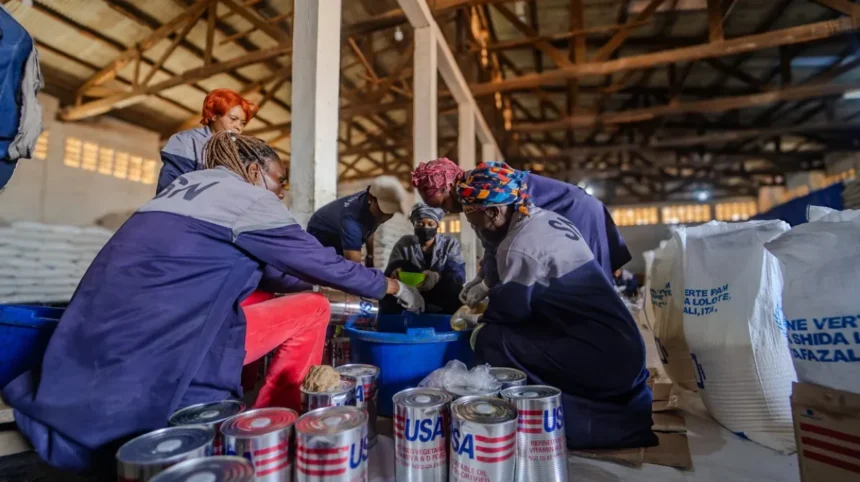
The first and foremost beneficiary of the allocation will be those millions of individuals around the world who depend on the assistance provided by the WFP to survive. The main role of the organization is to offer food assistance to communities impacted by conflicts, disasters, and economic instability. The funds allocated to WFP can help in resuming full scale food delivery programs in nations that were on partial food distribution due to lack of funds, restoring programs that involve transfer of money to local stores, and stock up on emergency nutritional foods.
In the six countries where funding cuts had critically impacted operations—commonly cited as Lebanon, Haiti, Yemen, Sudan, Burkina Faso, and the Democratic Republic of Congo—the grant will enable the WFP to:
- Resume monthly food ration distributions at pre-cut levels, restoring average rations of 2,100 calories per person per day.
- Rehire and retrain field staff who had been laid off or reassigned due to budget constraints.
- Replenish fuel and transportation reserves needed to deliver food to remote or conflict-affected areas.
- Expand school feeding programs that had been suspended, ensuring children receive at least one nutritious meal daily.
- Restart emergency nutrition treatment centers for children suffering from acute malnutrition.
The human impact is staggering. Before the grant, the WFP had warned it could feed only one-third of the 318 million people facing severe hunger in 2026. With this funding, that number could rise to nearly 50–60 million additional people, depending on how the money is allocated across regions and programs.
U.S. Foreign Aid Policy Shifts: From Reduction to Renewed Commitment
The grant is an example of a general trend in America’s foreign aid policy during the current presidency. The incumbent president of the United States, Donald Trump, who was sworn into office in January 2025 following his reelection in November 2024, had attempted to pursue a policy of cutting down foreign aid expenses within the framework of his “America First” policy. These efforts resulted in the announcement of the cuts in state departmental foreign food aid amounting to $1.3 billion in April 2025.
Yet, the fact that there was an $800 million grant may mean a shift. Even without reversing any policies, it seems that there is now an understanding on how global hunger is connected to the interests of the country. This includes the effects of hunger on migration, regional destabilization, and the proliferation of extremism among famine areas. With the replenishment of the resources of WFP, it is indirectly addressing this problem.
This pivot aligns with statements from U.S. officials who have acknowledged that “funding cuts mean it will struggle to feed even a third of the 318 million people facing severe hunger in 2026”. The grant serves as a corrective measure, acknowledging that earlier cuts had unintended consequences that outweighed the short-term budgetary savings.
Global Donor Dynamics: Will Others Follow the U.S. Lead?
A donation of $800 million from the U.S. will most likely affect the behavior of the donors around the world. WFP depends on voluntary donations from more than 100 countries, where traditionally the highest amount of donations comes from the United States. Usually, the proportion of these donations accounts for 30-40 percent of the total amount. As a rule, when the U.S. stops funding WFP, other countries do not respond promptly, resulting in some financial difficulties for the organization. However, the reverse is also true when other countries start following suit.
Already, there are indications that other donors may be responding. The WFP’s November 2025 warning about lacking “billions of dollars” to feed the world’s hungry had prompted calls for additional contributions from the European Union, Germany, and the United Kingdom. With the U.S. now leading with an $800 million grant, these donors may feel pressured to announce complementary funding to avoid being seen as lagging in the humanitarian response.
This grant will also enable the WFP to negotiate with private sector companies and philanthropists. Foundations such as the Gates Foundation and the World Economic Forum, as well as the food companies, have been ready to work alongside the WFP when government money is flowing steadily. If there is an $800 million grant from the United States, it may leverage more funds from the private sector.
Challenges Ahead: Sustainability, Allocation, and the Road to 2027
While the $800 million grant is a critical lifeline, it does not solve the WFP’s long-term funding challenges. The agency still faces a multi-billion-dollar shortfall for 2026, and the grant covers only a fraction of the total need. sustainability remains a concern: if the U.S. government does not commit to additional funding in 2027, the WFP could face another round of cuts once this grant is exhausted.
It will also be very important how the allocation of the grant is done. In choosing areas where the WFP needs to focus its aid program, it is important that there is consideration for both humanitarian aspects and politics. Countries such as Sudan, which is experiencing internal conflict resulting in mass displacement, or Yemen, which is dealing with a decade of strife and one of the worst humanitarian food emergencies in the world, will definitely benefit from a sizable portion of the grant.
Another challenge is operational capacity. Even with funding, the WFP faces logistical bottlenecks including fuel shortages, port closures, and security risks in conflict zones. The grant must be paired with investments in logistics, infrastructure, and staff to ensure that food reaches those who need it most.