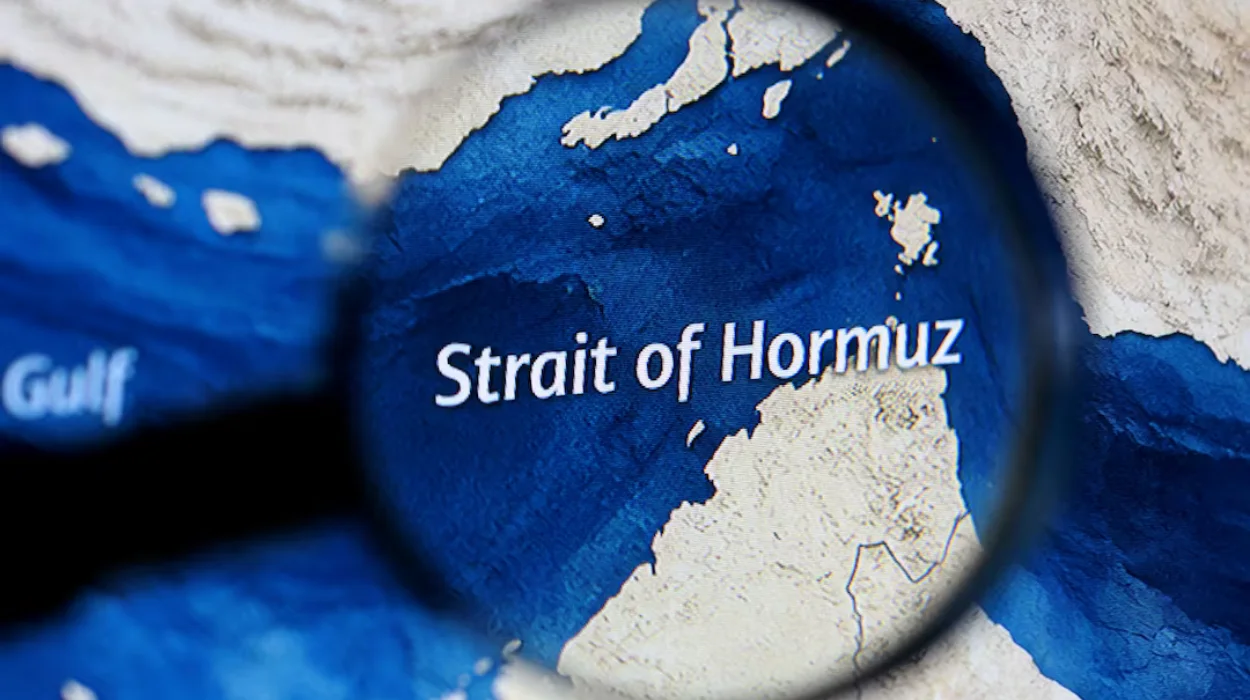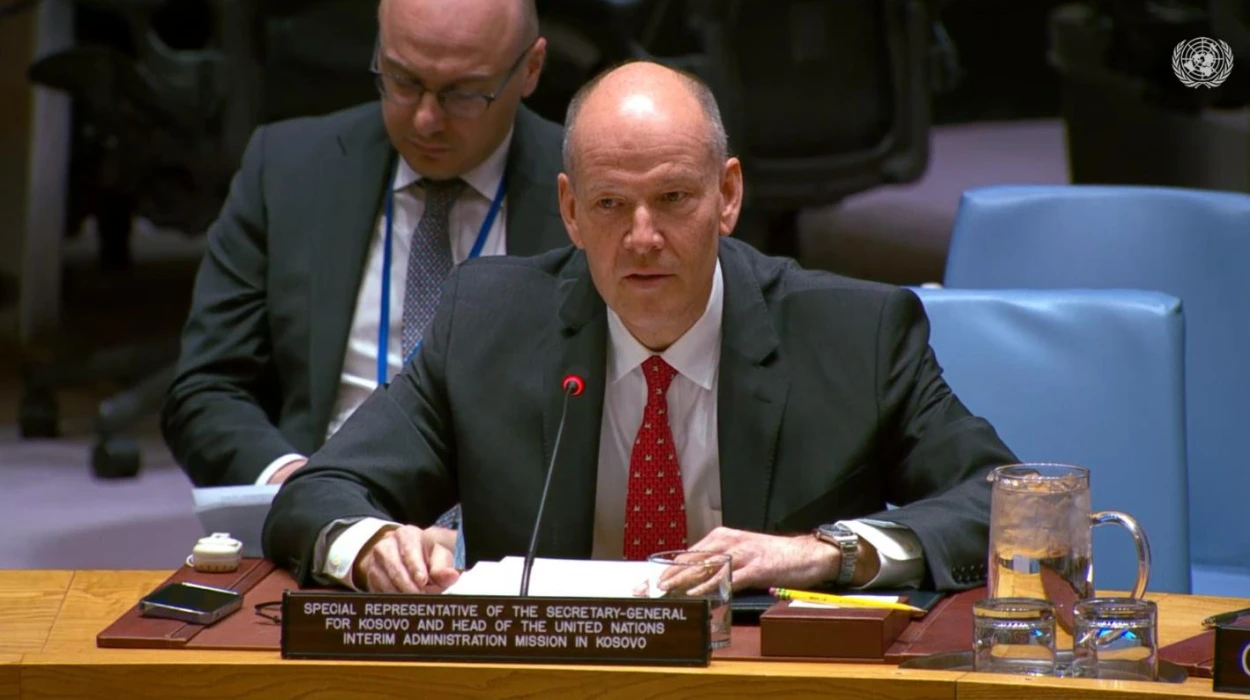
The recent veto by Russia and China at the United Nations Security Council has reinforced a widening governance gap over one of the world’s most strategically sensitive maritime corridors. The rejected resolution, introduced by the United States and supported by several Western allies, aimed to establish monitoring mechanisms and coordinated deterrence measures in response to repeated attacks on commercial shipping near the Strait of Hormuz. The proposal framed these incidents as a direct threat to global energy stability and humanitarian supply chains, but it failed to secure consensus among permanent members.
The diplomatic divide reflects a broader fragmentation in how maritime security is interpreted at the global level. Western delegations emphasized the urgency of protecting international trade flows, while Russia and China argued that the resolution failed to address the political and humanitarian context of the wider regional conflict. This divergence has transformed what was once a technical security issue into a deeply contested geopolitical arena, where even limited operational coordination becomes difficult to achieve.
Diverging Security Narratives and Strategic Friction
The debate exposed two competing frameworks for understanding instability in the Strait of Hormuz. One view prioritizes the protection of global shipping lanes as an essential component of international economic stability. The other stresses that maritime disruptions cannot be separated from the broader conflicts in Yemen and surrounding regions. These opposing interpretations have repeatedly stalled Security Council action, even as commercial losses and insurance costs continue to escalate.
In 2025, similar disagreements emerged during discussions on Red Sea shipping disruptions, where attempts to create unified monitoring frameworks collapsed due to disputes over attribution of responsibility. The current veto reflects not an isolated disagreement, but a sustained structural impasse in how maritime security threats are addressed within multilateral institutions.
Oil Chokepoint Instability Intensifies Global Economic Exposure
The Strait of Hormuz remains a critical artery for global energy flows, handling a substantial share of global oil and liquefied natural gas shipments. Disruptions in this corridor have already triggered significant volatility in energy markets, with shipping companies reporting rising insurance premiums and extended voyage times due to rerouting. These operational changes have introduced persistent cost pressures across global supply chains.
Since late 2024, maritime insurers have significantly increased risk premiums for vessels transiting the region, reflecting repeated incidents involving drone and missile strikes. Shipping firms have responded by diverting routes around the Arabian Sea, adding both time and fuel costs to long-haul trade. These adjustments have had cascading effects on global logistics systems already strained by post-pandemic recovery challenges.
Rising Costs and Structural Supply Chain Strain
The rerouting of commercial vessels has effectively extended global shipping timelines, increasing operational costs for energy importers and manufacturers alike. Container freight markets have experienced sharp fluctuations, while energy-importing economies have faced renewed inflationary pressure linked to higher transport and fuel costs. The cumulative impact has been particularly visible in Europe and Asia, where supply chains are highly dependent on stable maritime corridors.
In 2025, earlier disruptions in adjacent maritime routes demonstrated how localized conflict zones can generate global economic ripple effects. The current situation in the Strait of Hormuz represents a more concentrated version of this pattern due to its central role in global energy distribution networks.
Humanitarian Pressures Intersect with Maritime Instability
Beyond commercial disruption, instability in the Strait of Hormuz has significant implications for humanitarian operations in Yemen and neighboring regions. Maritime routes affected by security risks are also essential for transporting food, medical supplies, and fuel to populations already experiencing acute humanitarian stress. Interruptions in these flows directly affect the timing and scale of aid delivery.
United Nations agencies have repeatedly highlighted that maritime insecurity cannot be separated from humanitarian access constraints on land. In Yemen, where millions depend on imported assistance, delays in shipping translate quickly into shortages of essential goods. The same logistical constraints extend to other crisis zones that rely on regional maritime corridors for supply continuity.
Yemen Crisis and Aid Delivery Vulnerabilities
Humanitarian operations in Yemen remain highly sensitive to disruptions in maritime access routes. Restrictions and insecurity in surrounding waters have complicated delivery schedules for aid convoys, particularly those carrying food and medical supplies. Even short interruptions can disrupt distribution networks in areas with limited storage capacity and fragile infrastructure.
Throughout 2025, humanitarian monitoring reports documented repeated delays in aid shipments linked to maritime insecurity in nearby waters. These disruptions compounded existing challenges posed by damaged infrastructure and restricted overland access, reinforcing the importance of stable sea corridors for sustaining humanitarian response systems.
Geopolitical Rivalry Shapes Security Council Gridlock
The veto highlights the extent to which geopolitical competition now defines decision-making within the Security Council. Russia and China have consistently opposed resolutions they view as expanding Western-aligned security frameworks in strategically contested regions. Their position in this case reflects broader resistance to enforcement mechanisms perceived as reinforcing unilateral security agendas.
Western members, meanwhile, have increasingly framed maritime instability as a global systemic risk requiring coordinated enforcement. This divergence has produced repeated deadlocks, particularly in cases involving non-state actors operating in key shipping corridors. The result is a growing reliance on ad hoc coalitions outside the United Nations framework.
Proxy Dimensions and Regional Strategic Alignments
Maritime insecurity in the region is closely tied to wider proxy dynamics in the Middle East. Houthi forces have conducted repeated attacks on commercial shipping, framing their actions within the broader context of regional conflicts. These developments have drawn in external powers with competing strategic interests, further complicating efforts to build consensus at the Security Council.
In 2025, temporary and informal arrangements provided limited stabilization for shipping lanes, but these mechanisms lacked institutional durability. Without formal Security Council backing, maritime security has increasingly depended on coalition-based naval deployments and bilateral arrangements, which do not provide universal coverage or legitimacy.
Structural Limits of Multilateral Maritime Governance
The repeated failure to adopt binding measures on Hormuz security reflects deeper structural constraints within the current multilateral system. The Security Council remains the primary institution responsible for international peace and security, yet veto power continues to restrict its ability to respond to fast-moving maritime threats with unified action.
This institutional limitation has encouraged the expansion of alternative security frameworks, including multinational naval coalitions and regional defense partnerships. However, these arrangements remain fragmented and uneven in scope, lacking the comprehensive authority required to manage a global chokepoint of this scale.
The consequences of prolonged paralysis are increasingly visible in both economic and humanitarian terms. As shipping disruptions persist and energy markets adjust to sustained risk premiums, pressure is mounting for new governance approaches that can operate either alongside or outside traditional UN mechanisms. Whether such frameworks emerge through reform of existing institutions or through parallel security architectures remains uncertain, but the trajectory of recent vetoes indicates that consensus-based governance of critical maritime corridors is becoming increasingly difficult to sustain in a period defined by strategic rivalry and fragmented authority.