In a landmark move that underscores renewed American commitment to global humanitarian stability, the United States has announced a $1 billion contribution to United Nations agencies focused on child rights and food security. The funding, split primarily between UNICEF (the UN Children’s Fund) and the World Food Programme (WFP), aims to address deepening malnutrition, protect vulnerable children, and bolster food systems in over 40 countries facing acute crises.
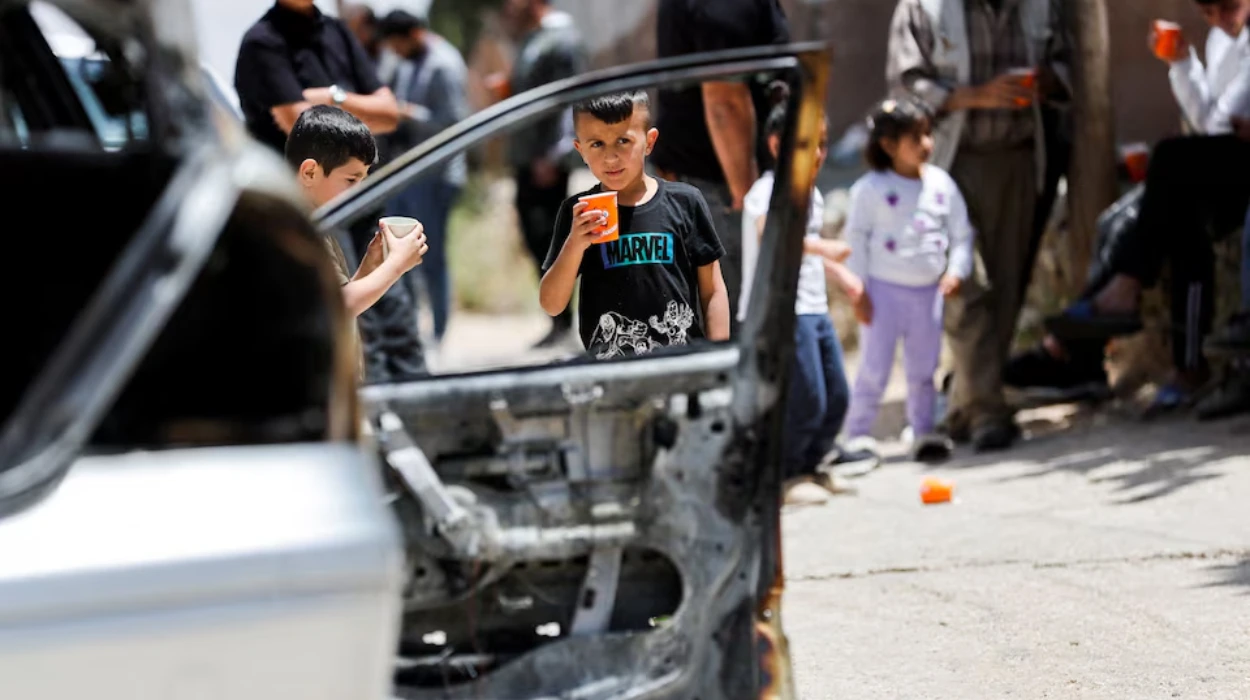
This initiative is taking place at a very crucial time. Hunger around the world has risen to new heights, and according to a recent report by the United Nations, there are more than 345 million people who suffer from food insecurity as of the year 2025. Similarly, malnutrition among children has also increased, where 150 million children under the age of five are stunted, while 45 million children are wasted. The US government’s initiative to invest this huge amount of money is an ethical and strategic choice as well.
“This investment is about saving lives today and building resilience for tomorrow,”
said Samantha Power, Administrator of USAID, in a press statement released alongside the announcement.
“Every dollar we commit is a promise to a child who may otherwise go hungry, to a family displaced by conflict, and to a community striving to recover from the shocks of climate and war.”
Breakdown of the $1 Billion: Where the Money Goes
The $1 billion allocation is not a single lump sum but a carefully structured funding package designed to maximize impact across multiple sectors and regions. According to official communications from the U.S. State Department and USAID:
- Approximately $218 million is earmarked for UNICEF, focusing on child protection, immunization, education in emergencies, and nutrition programs.
- Over $800 million will go to the World Food Programme, targeting emergency food aid, school feeding programs, and nutrition support for pregnant women and young children.
- The remaining funds support joint initiatives between the two agencies, including integrated food-nutrition-health packages and logistics for rapid deployment in conflict zones.
The money goes to more than 40 countries, where most of the aid goes to Yemen, Sudan, South Sudan, Somalia, Haiti, Burkina Faso, and Afghanistan. The situation in these countries is complicated by wars, natural catastrophes, and economic and political problems.
“We are not just giving money; we are giving hope,”
said Michael Waltz, U.S. Permanent Representative to the United Nations, during a briefing at the UN Headquarters in New York.
“This is a clear signal that the United States remains a reliable partner in the fight against hunger and for the rights of every child.”
Strategic Rationale: Why the US Is Investing Now
This is no coincidence either as far as when and how much the contribution was made. This can be attributed to a general change in the direction of U.S. foreign policy that started under the leadership of President Donald Trump after his re-election in November 2024 and inauguration in January 2025.
The $1 billion package comes in as part of an entirely new system through which to channel humanitarian aid, meant to serve as a replacement for broad and less effective funding streams that have been cut off in previous budgeting rounds. The Trump Administration had previously threatened UN bodies to either “adapt, reduce, or perish” due to changing financial dynamics.
“We’re not cutting aid; we’re rethinking it,”
said a senior State Department official involved in the negotiation process.
“This is about ensuring that every dollar reaches the front lines and delivers results that can be measured in lives saved and children protected.”
In addition, the money spent also correlates with the national security interests of the United States. The fewer instances there are of radicalization, migration surges, and regional insecurity because children have stable lives and food sources, the fewer eventual threats there will be to America.
Impact on Child Rights and Nutrition Programs
The UNICEF portion of the funding will be used to expand critical programs in emergency settings. These include:
- Vaccination campaigns to prevent outbreaks of measles, polio, and cholera
- School-in-a-box kits for displaced children
- Child protection services for those at risk of exploitation, trafficking, or recruitment by armed groups
- Nutrition supplements for infants and pregnant mothers
In other developing countries such as Yemen and South Sudan, where more than 60% of children have malnutrition, the intervention would be able to save thousands of lives. According to UNICEF, with the assistance of the United States, 12 million children will be provided with lifesaving care by 2026.
“When a child is hungry, everything stops,”
said Catherine Russell, UNICEF U.S. National Committee spokesperson.
“Education, health, safety—all of it depends on nutrition. This funding ensures that no child is left behind.”
Food Security and the World Food Programme’s Role
The WFP, the world’s largest humanitarian organization addressing hunger, will use the U.S. funds to deliver emergency food aid to millions of people. The program includes:
- Ready-to-eat food packets for displaced families
- School meals for children in conflict zones
- Cash-based transfers to support local markets
- Nutrition therapy for children with severe wasting
According to the WFP, in Afghanistan, where 23 million people are experiencing severe food shortages, 14 million people would be receiving food monthly from this fund. As for Haiti, which is facing disruption in its food supplies due to gang activities and political turmoil, 3 million people will receive emergency nutritional aid through this program.
“Food is not just sustenance; it is dignity,”
said WFP Executive Director Cecile Kyen.
“With this support, we can ensure that families don’t have to sell their last cow or pull their children out of school to eat.”
Global Reactions and Political Implications
It has received a mixed response from people around the world. While the United Nations Secretary-General António Guterres praised the donation, describing it as “a beacon of hope in a darkening world,” he further added that it will go a long way in averting a potential humanitarian catastrophe in the regions most susceptible to such disasters. But there have been some people who consider the donation to be inadequate to combat the problem of global hunger. According to reports published by the UN, the required amount of humanitarian funding for 2026 is $44 billion, and the US contribution accounts for just over 2% of it.
“This is a strong step, but it’s not enough,”
said Jan Egeland, head of the Norwegian Refugee Council.
“We need all rich nations to match this commitment if we want to stop the tide of starvation.”
In Washington, the move has been praised by bipartisan lawmakers who see it as a pragmatic investment in global stability. Senator Chris Murphy (D-CT) stated,
“This is foreign policy that saves lives and protects American interests. It’s smart, it’s moral, and it’s necessary.”
Challenges and Risks Ahead
Though optimistic, the implementation of such a fund will not be an easy task to achieve. Most of the recipient nations are currently at war zones where accessibility is limited. As an illustration, in Sudan, war has led to blocking of transport routes and evacuation of the humanitarian workers. Apart from that, the risk of accountability and poor governance may pose another challenge. The Trump government has insisted on stringent accountability measures to ensure that the money is properly utilized.
“We’re not just handing over money and walking away,”
said a USAID spokesperson.
“We’re watching the results. If programs don’t deliver, we’ll adjust.”
Climate change also poses a growing threat. Droughts in the Horn of Africa and floods in South Asia are disrupting food production and increasing the need for emergency aid. The U.S. contribution must be flexible enough to respond to these evolving crises.
A New Era of Humanitarian Leadership?
This $1 billion investment may represent a departure from previous American humanitarian leadership. With decades of budget reductions and mistrust in multilateral organizations, the Trump Administration seems to be making a move back towards impactful humanitarian assistance. The key elements include efficiency, accountability, and impact – all of which have more value than mere investments in institutions. Should the effort prove successful, a new trend for global humanitarian funding may take root. Other countries will join, leading to an improvement in the global humanitarian system.
“This is not just about money,”
said Michael Waltz.
“It’s about leadership. It’s about showing the world that the United States still stands for the most vulnerable.”
As the funding begins to flow, the hope is that millions of children will receive food, protection, and a chance at a better future. In a world increasingly shaped by crisis, this U.S. contribution offers a measure of stability—and a promise that no child will be forgotten.